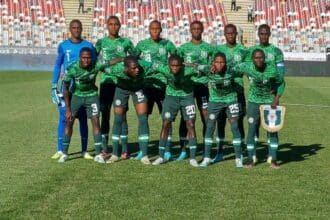


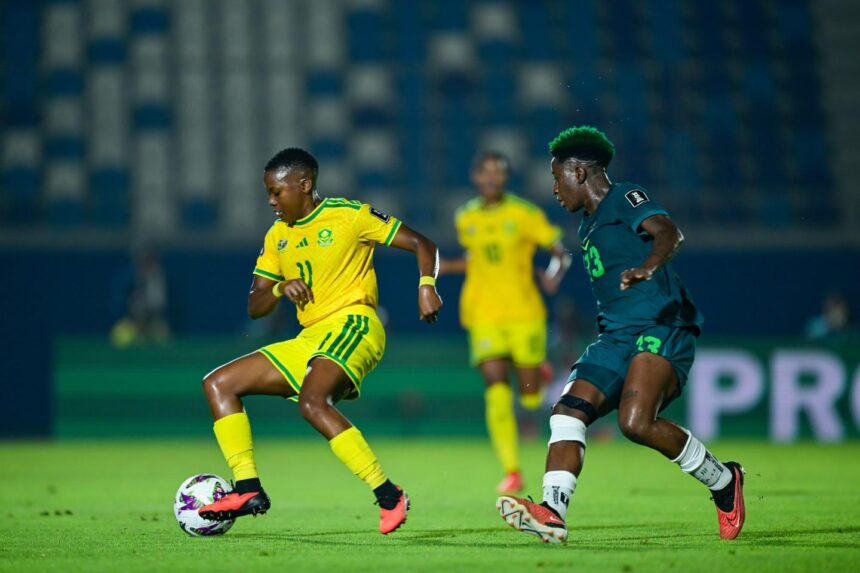
When the final whistle went in Casablanca on Thursday night, Nigeria’s search for an equaliser was over. So was a record stretching back 35 years.
The Super Falcons had appeared at all nine FIFA Women’s World Cups since the tournament began in 1991. Brazil 2027 will be the first without them.
South Africa delivered the final blow with a 2-1 victory, but that match did not create Nigeria’s problems. It was the last opportunity to rescue a campaign that had been in trouble since the opening game.
The African champions played five matches in Morocco. They lost three, conceded eight goals and scored five of their ten goals from the penalty spot.
More Read





This was not one bad night. It was a poor tournament.
Malawi exposed early dangers
Malawi’s run to the final has shown that the WAFCON debutants were better than many expected. That does not excuse Nigeria’s 3-2 defeat.
The match was goalless until sisters Temwa and Tabitha Chawinga scored six minutes apart in the second half. Rasheedat Ajibade’s stoppage-time penalty gave Nigeria hope, but Temwa scored again before Uchenna Kanu made it 3-2 in the ninth minute of added time.
The score suggested a close contest. The pattern was more troubling. Nigeria did not score from open play until the match was almost over and had allowed a goalless game to escape them in six minutes.
It was the first time a WAFCON debutant had beaten Nigeria and the first time any team had scored three goals against the Super Falcons at the tournament.
Six goals did not solve the problems
Nigeria responded by beating Zambia 1-0. Asisat Oshoala scored early before Oluwatosin Demehin was sent off five minutes before half-time. Protecting the lead with ten women took discipline, but it turned the second half into a fight for survival.
The 6-2 victory over Egypt looked like a complete recovery. Six players scored and Nigeria secured a quarter-final place. The detail told a different story.
Three goals came from penalties and three were scored in added time across the two halves. CAF recorded 25 Nigerian attempts, with nine on target. Egypt scored twice from their three efforts on target.
Nigeria ended the group stage with five goals conceded, already their highest total at a single WAFCON. At the previous tournament, the Super Falcons conceded three times in six matches on the way to the title. The control that defined that campaign had disappeared.
Two chances to qualify, two defeats
Victory over Cameroon in the quarter-final would have secured Nigeria’s place at the World Cup. Instead, Myriam Nyadjou’s 19th-minute free-kick ended the title defence.
Nigeria created chances, but Cameroon goalkeeper Michaely Bihina made nine saves. The 1-0 defeat was only Cameroon’s second victory over Nigeria in 14 meetings. It was also the first time the Super Falcons had failed to reach the semi-finals of a centralised WAFCON.
The play-off against South Africa offered the Super Falcons one final route to the World Cup. Justin Madugu brought Oshoala, Kanu and Francisca Ordega into his starting side, but Nigeria still struggled to turn possession into clear chances.
Thembi Kgatlana opened the scoring in the 56th minute and Refiloe Jane added a second 20 minutes later. Christy Ucheibe converted a late penalty after Jane was sent off, before Folashade Ijamilusi struck the crossbar in stoppage time.
South Africa held on. For the third time in five matches, Nigeria had conceded at least twice. For the second time, the response came too late.
Madugu earned considerable credit for leading Nigeria to a record tenth African title last year. That success does not remove the questions raised by this campaign. His team never found a dependable balance between controlling possession, creating chances and protecting the spaces opponents attacked.
The preparation questions were already public
Missed chances and individual errors explain parts of Nigeria’s results. They do not explain all the questions surrounding the preparation that preceded them.
CAF’s decision to move the tournament from March to July, announced 12 days before the original opening date, disrupted every participating country. Nigeria had already used the February window for two friendlies against Cameroon and then had to reset its plans.
By May, Punch reported that the Super Falcons had regrouped only once since qualifying in October, for the two matches against Cameroon. A proposed camp in the United Kingdom and friendly against Jamaica fell through when Jamaica withdrew.
The NFF subsequently arranged two home friendlies against Senegal. Nigeria won the first match 2-1 on 5 June and completed the double with a 3-0 victory three days later in Ikenne.
The final camp opened in Casablanca on 13 July, 15 days before the Malawi game. The NFF reported that 10 players had arrived by lunchtime the following day, with others still expected. A planned friendly against Ghana was cancelled. Tanzania were arranged as replacement opponents and Nigeria won 2-1 five days before the tournament began.
Nigeria therefore played three reported warm-up matches after the postponement: the two victories over Senegal and the win against Tanzania.
The issue is not that the Super Falcons had no preparation. It is whether the programme gave the coaching staff enough time with the complete squad, whether the opposition provided the tests Nigeria needed and why the problems exposed against Malawi remained unresolved throughout the tournament.
The players had been calling for better preparation before the Senegal matches were arranged. In an interview with The Guardian, Jennifer Echegini urged the federation to use every available camp window. She also acknowledged that the team had won the previous title despite preparing less than the players wanted.
Ajibade was more direct in April: “We are also fighting for World Cup qualification. So, why are we not preparing with the seriousness and intensity this demands?”
The federation responded by arranging the Senegal friendlies. That should be acknowledged. The results in Morocco still require an explanation.
The NFF should account for the preparation programme, the cancelled Ghana friendly, the amount of time the coaching staff had with the complete squad and the technical reviews conducted during the tournament. Madugu and his staff must explain why the defensive problems continued, why the attacking combinations remained unsettled and what changed between the team that won the title and the one that lost three of five matches a year later.
The response must go beyond a change of coach
The Super Falcons still have a strong core. Chiamaka Nnadozie, Ajibade, Echegini, Ucheibe, Deborah Abiodun, Demehin, Gift Monday and Rinsola Babajide should have major international tournaments ahead of them. Oshoala, Osinachi Ohale and Ordega still offer experience that must be managed properly as the next generation takes on greater responsibility.
There is enough talent to rebuild. The harder task is creating a team that no longer depends on reputation, late rallies or individual quality to escape difficult matches.
The field around Nigeria has changed. Malawi reached the final in their first WAFCON appearance. Cameroon eliminated Nigeria and hosts Morocco. Algeria also reached the semi-finals, while South Africa recovered from their quarter-final defeat to end Nigeria’s World Cup hopes. Nigeria’s ten titles remain unmatched, but history no longer provides protection on the pitch.
Ajibade said after the defeat that the team must prepare more and demand more of itself, individually and collectively. The same demand must be made of the coaching staff and the federation.
Any decision on Madugu must follow that review. Changing the coach would be the most visible response, but it would not explain the preparation failures or the repeated technical problems. Retaining him without a clear review would suggest that the NFF has learned little from the campaign.
For 35 years, the Super Falcons made World Cup qualification look inevitable. Morocco showed that it was not.
Nigeria will watch Brazil 2027 from home. Before the rebuilding begins, the NFF owes the players and the public an honest account of how the country’s most successful national team was allowed to miss it.
© Bold Sports Media. All rights reserved. If sharing, kindly credit Bold Sports as the source and include a link to the original post. Unauthorised use is prohibited.