


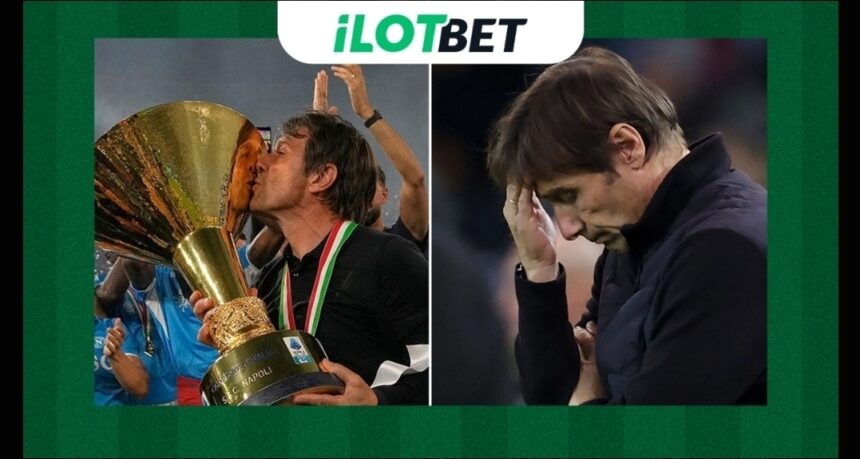
Antonio Conte is one of modern football’s great domestic generators. Ask any neutral and they’ll list the trophies: three straight Serie A titles with Juventus, an English Premier League crown with Chelsea and a title-breaker at Inter, plus the recent Scudetto he led Napoli to. Those achievements are indisputable and well documented.
And yet there is a disconnect that keeps showing up every time Conte takes a team into continental competition: domestic mastery followed by European underperformance. Napoli’s latest exit from the Champions League, dumped out after a 3–2 home defeat to Chelsea and failing even to reach the new playoff phase, is the most recent, glaring example.
Napoli’s recent Champions League exit has reopened a familiar debate. It was not a shock in isolation. It felt like the continuation of a pattern that has followed Conte for over a decade. The question is no longer whether this trend exists, but why it keeps repeating itself.
The first answer lies in the nature of Conte’s football. His teams are designed to win leagues, not tournaments. League football rewards repetition, structure and control. Over 38 games, Conte’s strict tactical discipline, intense physical demands and clearly defined roles grind opponents down. His sides concede few goals, dominate territory and rarely beat themselves. That approach is devastating in domestic competitions where consistency is king.
More Read






The Champions League works differently. It is less forgiving and far more chaotic. One bad night, one tactical mismatch or one moment of hesitation can undo months of work. In Europe, adaptability often matters more than control. Conte’s greatest strength, his rigid structure, becomes a weakness when opponents disrupt it. His teams are exceptionally drilled, but when Plan A fails, there is rarely a convincing Plan B.
This pattern has been most clearly exposed at Juventus and Inter Milan. Conte rebuilt both clubs into dominant domestic forces, yet struggled to translate that authority into Champions League success. At Juventus, his side failed to progress beyond the quarter-finals, but after he left, Massimiliano Allegri guided the same club to two Champions League finals in three seasons.
A similar story unfolded at Inter Milan. Conte ended the club’s long wait for a Serie A title in 2020–21 but exited the Champions League at the group stage. His successor, Simone Inzaghi, took Inter to the Champions League final in 2023 and again in 2025, underlining how the same institutions achieved greater European heights once a different tactical approach was adopted.
Napoli’s situation follows the same script. Conte restored domestic authority and competitive edge, but when faced with elite European opposition in a compressed league-phase format, his side struggled to manage games on fine margins. The loss to Chelsea was not simply about quality. It was about moments, adjustments and composure under pressure. Those are areas where Conte’s teams, historically, have looked uncomfortable in Europe.
Another factor is physical and mental cost. Conte demands extreme intensity from his players. Over a domestic season, that intensity creates superiority. In Europe, where schedules are tighter and opponents are equally conditioned, fatigue accumulates faster. The physical edge Conte relies on narrows, while the tactical demands increase. His teams often arrive at decisive European matches looking tense rather than expressive, cautious rather than inventive.
There is also a psychological element. Conte is a master of siege mentality. Domestically, it unites squads and sharpens focus. In Europe, that same mindset can lead to overprotection and risk aversion. Instead of embracing the moment, his teams often appear burdened by it. Champions League success frequently belongs to sides that manage pressure with calm rather than confrontation.
None of this diminishes Conte’s achievements. He remains one of the finest league coaches of the modern era. But it does suggest a ceiling in Europe that he has yet to break. The evidence across Juventus, Chelsea, Inter and Napoli points to a consistent truth: Conte builds champions for marathons, not for knockout races or hybrid European formats where adaptability is essential.
Napoli’s exit is therefore not an anomaly. It is the latest chapter in a long-running story. Until Conte either evolves tactically in Europe or builds teams with greater creative freedom and flexibility, the Champions League is likely to remain his unsolved puzzle.
Domestic greatness and European success are not the same skill. Antonio Conte has mastered one. The other continues to escape him.
Want to put your football knowledge to good use? Join iLOTBET today for the best betting odds, exciting giveaways, generous bonuses and a chance to win an iPhone 17.
© Bold Sports Media. All rights reserved. If sharing, kindly credit Bold Sports as the source and include a link to the original post. Unauthorised use is prohibited.