
For almost 20 years, Nigeria’s leading male sprinters chased Olusoji Fasuba’s 100m 9.85s national record.
Divine Oduduru came within one-hundredth of a second when he ran 9.86s in 2019. Others broke the 10-second barrier and appeared capable of going even faster, but the mark Fasuba set in Doha in 2006 remained untouched.
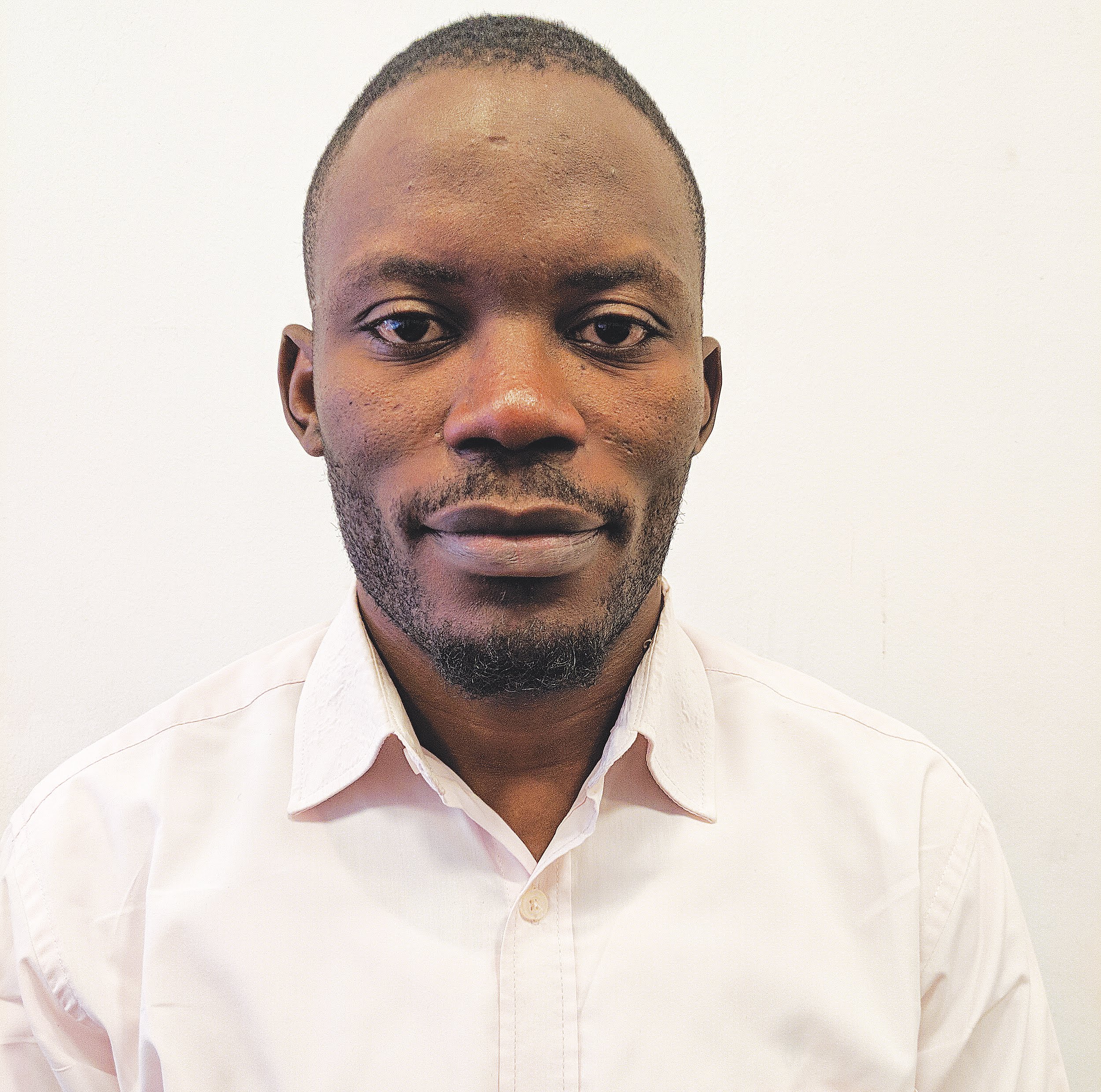
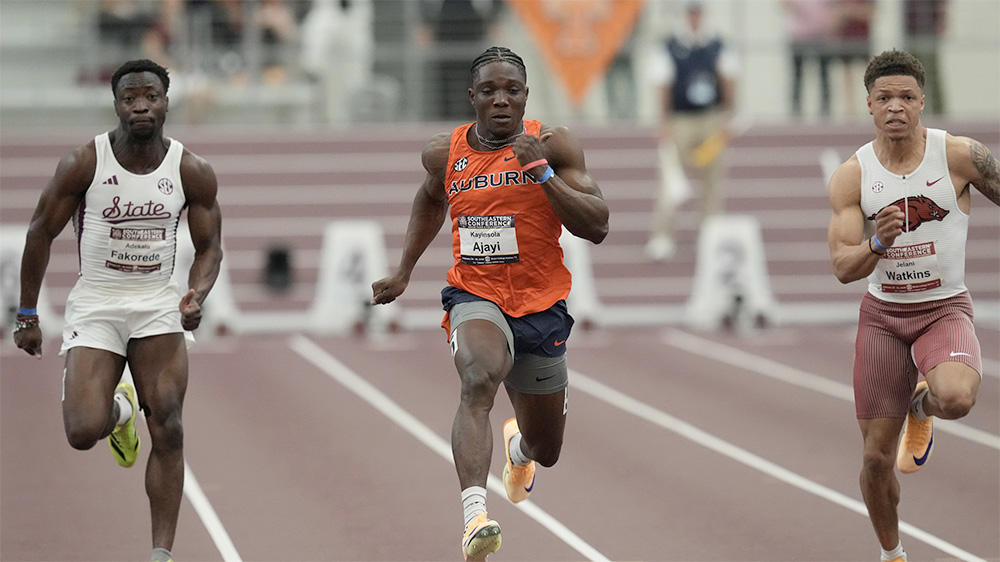
Then Kanyinsola Ajayi ran 9.84s at the 2026 NCAA Division I East First Round track and field meet on May 29, breaking a mark that had stood across generations for two decades.
It was the smallest possible improvement to the record, but it was enough to end one of the longest waits in Nigerian athletics and make Ajayi the fastest Nigerian man in history.
One-hundredth of a second may appear insignificant outside athletics, but over 100m, it can separate first from second, decide a medal and, in Ajayi’s case, bring an era to an end.
For years, Fasuba’s time was the standard against which every promising Nigerian sprinter was measured. Each new sub-10s performance revived hopes that the record would finally fall, but generation after generation came and went without moving it. Until Ajayi finally did.
The significance of the performance was not lost on Fasuba, whose name had occupied the top of Nigeria’s all-time list since 2006.
“Not every day does one wake up to see a long-standing record broken,” Fasuba wrote in a Facebook post after the race.
There was another reason Ajayi’s breakthrough carried special meaning for Fasuba. Two years earlier, he had identified the young sprinter as one of the athletes capable of breaking his record.
Ajayi has now justified that belief.
“The joy in my heart knows no bounds because this is the kind of improvement I have been clamouring for from Nigerian men’s sprinting,” Fasuba wrote.
“Records are not meant to stand forever. They are meant to inspire the next generation to dream bigger, work harder and push the boundaries even further.”
It was more than a congratulatory message from a former record holder.
Fasuba had pushed Nigerian sprinting to a level no other Nigerian could reach for two decades. His response showed that he saw Ajayi’s breakthrough not as the loss of something personal, but as the continuation of a Nigerian sprint tradition.
Athletics coach and statistician Lekan Soetan described the 9.84s as one of the defining moments in Nigerian athletics.
“That barrier had resisted several world-class Nigerian sprinters,” Soetan told Bold Sports. “His 9.84 represents a new benchmark and signals that Nigerian sprinting is entering another golden era.”
Ajayi has since equalled the national record twice, showing that the first 9.84s was not an isolated performance.
Opening comparison
The hundredth that changed history
Twenty years separated by one-hundredth of a second.
Olusoji Fasuba
Doha, 2006
Nigerian record for 20 years
Kanyinsola Ajayi
Lexington, 2026
New Nigerian record

But his record is not only about the man who finally went faster than Fasuba.
It is the latest chapter in a Nigerian sprint story that stretches back several decades, through Kolawole Abdulai, Chidi Imoh, Olapade Adeniken, Davidson Ezinwa, Seun Ogunkoya and Fasuba, men who took turns lowering the national record and leaving another target for the generation behind them.
Ajayi has now moved that target by one-hundredth of a second. While the margin was small, the history behind it was not.
More Read




The Nigerian sprinters who moved the record forward
Long before Ajayi lowered the national record to 9.84s, different generations of Nigerian sprinters had taken turns pushing the country closer to the limits of the men’s 100m.
The journey stretches back at least five decades to Kolawole Abdulai, whose 10.30s in 1976 was one of the early landmarks in Nigerian sprinting.
At the time, running below 10.30s was a major achievement for a Nigerian athlete. There were fewer international competitions, limited access to modern training facilities and little of the sports science now available to elite sprinters.
Abdulai’s mark, however, gave the athletes who followed something to chase.
By the mid-1980s, Chidi Imoh had taken Nigerian sprinting to another level. In 1986, he became the first Nigerian to run 10.00s, which was also the fastest time in the world that year.
Imoh was one of Africa’s leading sprinters during the period. He won continental titles, claimed the 100m at the 1987 African Games and later formed part of Nigeria’s silver medal-winning 4x100m relay team at the Barcelona 1992 Olympics.
His 10.00s showed that a Nigerian could get to the edge of the sub-10s barrier. That barrier eventually fell through Olapade Adeniken.
Adeniken ran 9.97s in 1992 to become the first Nigerian to legally break 10s. He later improved his personal best to 9.95s in 1994, but by then, the national record had become part of a fierce contest among an outstanding group of Nigerian sprinters.
Adeniken, Imoh and Davidson Ezinwa were teammates, but they were also among the men driving one another to run faster. Together with Oluyemi Kayode, they won Nigeria’s historic 4x100m silver medal at the 1992 Olympics in an African record of 37.98s.
Two years later, Ezinwa lowered the Nigerian 100m record to 9.94s in Linz, Austria.
The performance placed him among the fastest men in the world and gave Nigeria its third major improvement in less than a decade, from Imoh’s 10.00s to Adeniken’s sub-10s breakthrough and then Ezinwa’s 9.94s. The record did not stay with Ezinwa for long.
Akure-born Seun Ogunkoya was still a teenager when he began challenging Nigeria’s established foreign-based sprinters. He improved from 10.43s in 1995 to 10.15s the following year and then ran 9.97s in 1997.
In 1998, he produced the finest season of his career. He first ran 9.94s to win the African Championships before improving to 9.92s at the World Cup in Johannesburg.
Ogunkoya’s run made him the fastest Nigerian and African in history at the time. The record would remain his for eight years.
Then came Fasuba.
In Doha on May 12, 2006, Fasuba stopped the clock at 9.85s, taking seven-hundredths off Ogunkoya’s mark in one race.
It was a significant jump by the standards of the 100m. Fasuba did not only become Nigeria’s fastest man; he also broke Frankie Fredericks’ long-standing African record.
The time remained the continental record until 2021. It continued as Nigeria’s national record until Ajayi’s breakthrough in 2026.
“To have held those records for that length of time was a great honour and one of the proudest moments of my career,” Fasuba wrote after Ajayi’s breakthrough.
Nigeria’s men’s 100m record
The race through generations
For five decades, each generation moved Nigeria closer to the limits of men’s sprinting. Ajayi’s 9.84s became the latest step in that progression.
Kolawole Abdulai
10.30sChidi Imoh
10.00sOlapade Adeniken
9.97sDavidson Ezinwa
9.94sSeun Ogunkoya
9.92sOlusoji Fasuba
9.85sKanyinsola Ajayi
9.84sSwipe to follow the progression →
From Abdulai’s 10.30s in 1976 to Ajayi’s 9.84s in 2026, the national record improved by almost half a second. In the 100m, that is a huge distance.
Each record holder left the event at a different point from where he met it. Imoh took Nigeria to 10.00s. Adeniken broke the 10-second barrier. Ezinwa and Ogunkoya pushed the country deeper into sub-10s territory, while Fasuba produced a time that became the standard for an entire generation.
“Each generation pushed the limits a little further,” Soetan said.
“Chidi Imoh, Olapade Adeniken, Davidson Ezinwa, Seun Ogunkoya and Olusoji Fasuba each represented a major leap for their era.”
Ajayi’s name is now the last line on the progression table, but his emergence did not erase the work of the men before him. His 9.84s was possible because every generation had already moved the target closer.
Fasuba had moved it further than anyone else. For 20 years, nobody could move it again.
Nigeria’s sprint generations
The men who moved the record forward
Swipe horizontally to view the full gallery.
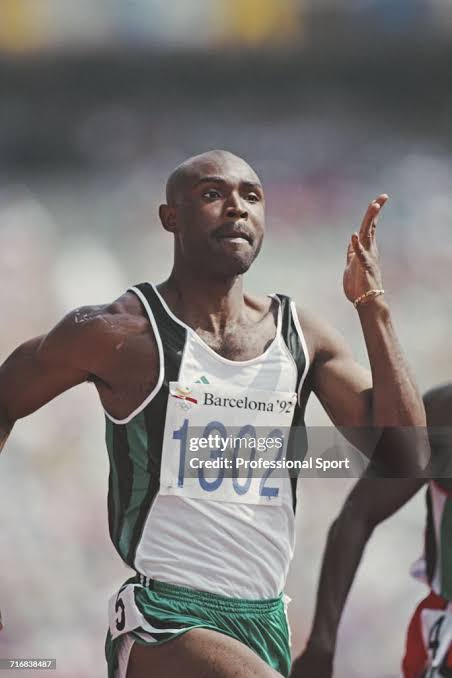
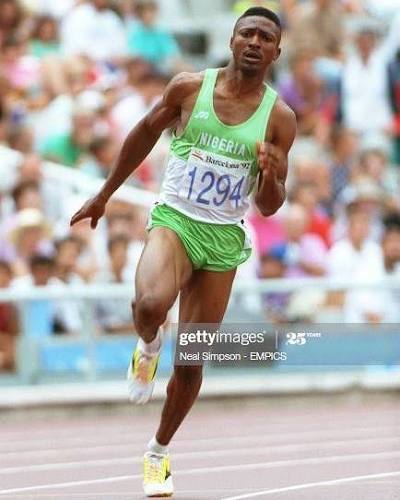
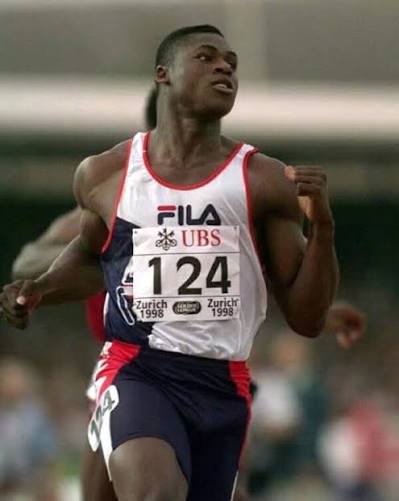
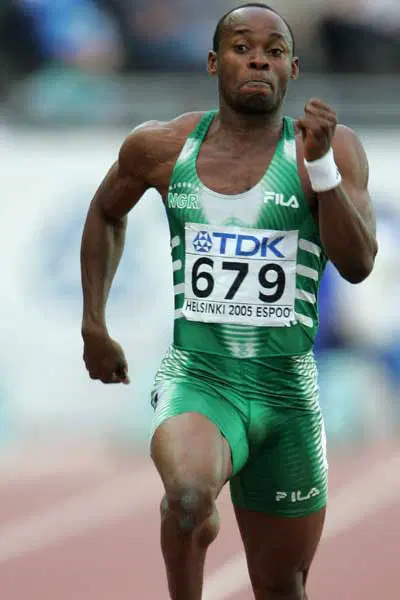
The generations before Ajayi: Chidi Imoh, Olapade Adeniken, Seun Ogunkoya and Olusoji Fasuba helped move Nigeria progressively deeper into sub-10 territory.
Why Fasuba’s record stood for 20 years
When Fasuba ran 9.85s in Doha in 2006, the performance changed the standard for Nigerian men’s sprinting.
The time was not only a national record. It was also an African record and, for the Nigerian sprinters who followed, it became the mark to chase.
For almost two decades, nobody caught it. Oduduru came closest.
At the 2019 NCAA Championships in Austin, Texas, he won the 100m in 9.86s, only one-hundredth behind Fasuba. He later completed the sprint double with 19.73s in the 200m.
Oduduru appeared to have everything required to eventually break the record. He was fast, powerful and already among the world’s leading sprinters.
But his career later stalled amid doping issues. In 2023, the Athletics Integrity Unit announced that a disciplinary tribunal had banned Oduduru for six years after finding him guilty of possession of prohibited substances and attempted use of a prohibited substance or method. The sanction removed the man who had come closest to Fasuba from the sport during what should have been some of the prime years of his career.
Others also came through. Raymond Ekevwo established himself among Nigeria’s leading sprinters, while Enoch Adegoke reached the Olympic 100m final in Tokyo after running 9.98s in the heats.
Godson Oghenebrume ran 9.90s. Favour Ashe joined the sub-10s club and continued to improve, eventually becoming the Nigerian with the most sub-10s performances. Udodi Onwuzurike showed his quality in both the 100m and 200m, while Alaba Akintola added to a growing group of Nigerian sprinters competing at a high level.
The record that refused to fall
Twenty years at the top
Fasuba’s 9.85s survived every challenge for two decades before Ajayi finally moved Nigeria’s record forward.
Olusoji Fasuba
9.85s National recordDivine Oduduru
9.86s One hundredth awayGodson Oghenebrume
9.90s Another sub-10 challengeKanyinsola Ajayi
9.84s New Nigerian recordFasuba’s record survived for 20 years.
2026Swipe to follow the twenty-year wait →
While the names kept changing, the record did not.
Whenever one of them broke 10 seconds or produced another personal best, the question returned: would this be the athlete to finally go faster than Fasuba? The answer remained no.
For Soetan, the repeated near misses showed that breaking a national record required more than talent.
“Breaking a national record requires much more than raw speed,” Soetan told Bold Sports.
“It demands excellent health, technical efficiency, quality competition, psychological confidence and precise execution on the day.”
In the 100m, there is little room for error. A poor start, a technical mistake or a loss of form in the final metres can be enough to cost an athlete the hundredth he needs.
Injuries can also interrupt progress, while inconsistency can prevent a sprinter from producing his best performance when the conditions are right.
“Many gifted athletes possessed the talent but were affected by injuries, inconsistency or other setbacks,” Soetan said.
That was why Oduduru’s 9.86s carried so much weight. He had come within the smallest possible margin without taking the record.
The generation around Kanyinsola Ajayi
The generation that followed him, however, offered Nigeria something different.
It was no longer only about one outstanding sprinter carrying the country’s hopes. Several Nigerians were running below 10.10s and 10.20s at the same time, with more of them beginning to break 10 seconds.
Soetan believes it is the deepest generation of Nigerian male sprinters he has seen.
“Nigeria has never had this number of sub-10.10s and sub-10.20s athletes competing at the same time,” he said.
He attributes the depth to stronger collegiate development in the United States, improved sports science, better access to elite coaching and world-class competitions, and the internal pressure created by several Nigerians running fast at the same time.
“When athletes continually challenge one another, everyone improves,” Soetan added.
The American collegiate system has become particularly important. It has given Nigerian sprinters access to better facilities, regular high-level competition and structured development programmes where small technical and physical improvements can be measured across a season.
The effect has been visible in the times. Nigeria now has more athletes operating close to the highest level than in many previous eras. That depth raises the standard in the individual event and also offers the country an opportunity to rebuild a competitive men’s 4x100m relay team.
Ajayi has not risen alone. His Auburn University teammate Israel Okon joined the sub-10 club with a legal personal best of 9.99 seconds in May 2026 and also ran 19.94 seconds over 200m at the same NCAA East Preliminary meeting where Ajayi produced the national record. Alongside Favour Ashe, a 9.93-second performer, Ajayi and Okon give Nigeria several genuine options across the individual sprint and relay events.
Why this generation is different
Nigeria’s modern sprint depth
Ajayi’s record did not emerge in isolation. Around him is a deeper pool of Nigerian sprint talent, giving the country stronger options in the individual event and renewed promise in the relay.
Kanyinsola Ajayi
Nigeria’s fastest man ever, with three performances at the national-record mark.
Favour Ashe
The reigning Nigerian champion remains one of the key figures in the country’s current sprint pool.
A deeper generation
With Ajayi, Ashe and Auburn teammate Israel Okon among the emerging names, Nigeria now carries more top-end speed across the 100m than in many previous eras.
A renewed relay chance
This depth gives Nigeria a realistic platform to rebuild a competitive men’s relay team for major championships.
For Fasuba, however, the present depth must not bring an end to the search for the athletes who will follow Ajayi’s generation.
“As we celebrate him today, we must also continue searching for, developing and supporting the next generation of talents,” he wrote.
“Strong athletics nations never stop producing champions.”
But even within such a strong generation, Fasuba’s record continued to stand.
The missing hundredth still belonged to Fasuba.
By the time Ajayi ran 9.84s, the record had survived several world-class Nigerian sprinters, injuries, near misses and one of the deepest pools of sprint talent the country had produced.
For 20 years, it refused to fall.
From football in Ikorodu to the athletics track
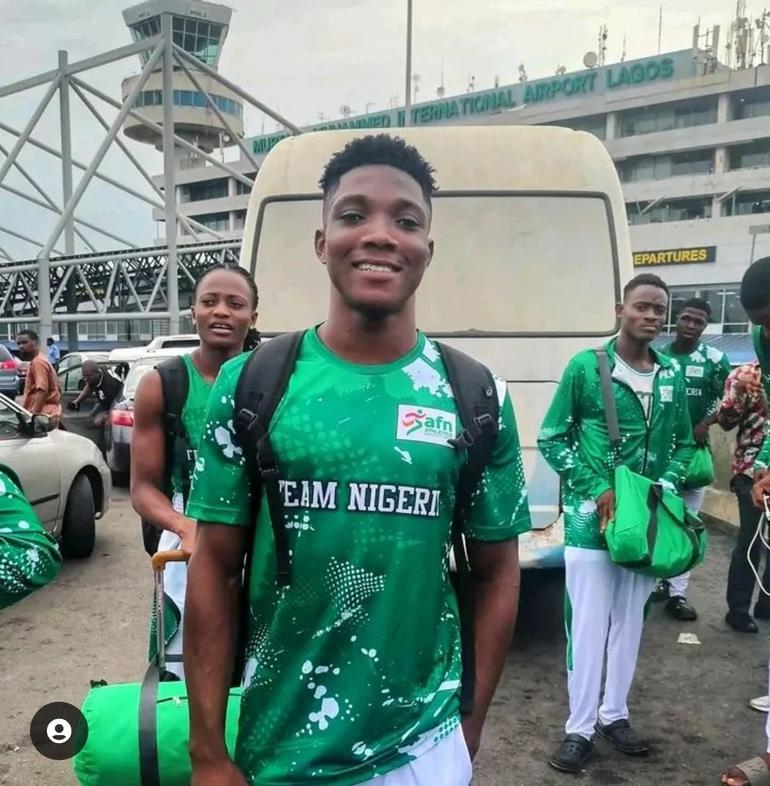
Ajayi on his return to Nigeria after the 2023 African U18/U20 Championships, an early stage in the rise that would later take him to the national record.
He wasn’t running. He was playing football.
Before he became Nigeria’s fastest man, Ajayi was just a schoolboy in Ikorodu whose speed first stood out on a football pitch. Coach Olapade Lawal saw something in the way he moved and persuaded him to try athletics, a decision that changed the direction of his life.
But for some re-orientation, Ajayi’s name would never have entered the history books as Nigeria’s 100m record holder. He wasn’t running, he was playing football.
That was where coach Olapade Lawal first noticed Ajayi in Ikorodu, a suburb of Lagos during the COVID-19 period in 2021, where there were still some restrictions on public gathering including sports.
Lawal had once travelled a similar path. She also started with football before a coach spotted her speed and moved her into athletics. So when she saw Ajayi moving across the pitch, she recognised something others may not have noticed.
“I saw him playing football and I saw his speed,” Lawal told Bold Sports. “I said, ‘You have speed. Come and try athletics.’ And he came.”
It was not only the speed. Lawal noticed his high knees, the movement of his arms and the natural way he carried himself while running.
“I saw the high knees. I saw the way he moved, the hands. I knew this guy would be good in athletics.”
Ajayi’s first experience of the sport, however, did not suggest that he would one day become Nigeria’s fastest man.
After his first training session, he disappeared for about two weeks.
“He said athletics was hard, so I went looking for him,” Lawal recalled.
Ajayi eventually returned, but football still held his interest. It took a school competition and an unusual reward to make him see athletics differently.
Lawal registered him for the Maltina School Games, where he won both the 100m and 200m. His victories earned him two new HP laptops.
That was enough to change his mind.
“He said, ‘I won’t go back to football. I have interest now in athletics,’” Lawal said.
The following year, he returned to the competition, won the two sprint events again and received two tablets.
By then, the boy who once ran away from training had become one of the most committed athletes in Lawal’s group.
Ajayi was an SS1 student when he began the sport. His first recorded personal best was 10.92s in 2021, before he improved to 10.26s the following year.
He attended school at Oreyo, while training was held at Igbogbo Stadium, both in Ikorodu. Ajayi regularly walked from school to the training ground and was often there before his coach arrived.
The road behind the record
From a school walk to the world stage
Ajayi’s journey began with a regular walk to training in Ikorodu. It later expanded across Nigeria, Zambia and the United States.
The daily beginning
From school to training
Ajayi regularly walked from school to training and sometimes arrived before his coach.
The expanding journey
From local discovery to elite development
Lagos competitions led to Kaduna trials, the continental stage in Ndola and, eventually, elite collegiate development in the United States.
Swipe each route to follow the journey →
“He became so serious in training,” Lawal said. “Before I came to training, he was already there.”
Even the West African Senior School Certificate Examination did not keep him away from the track. After writing his papers, Ajayi would report for training still dressed in his school uniform.
“Even while he was writing his WAEC, after writing his paper, he would still come to training in his uniform,” Lawal said.
For the coach, Ajayi’s discipline soon became as important as his speed.
“He is cool-headed. He listens to what you tell him to do. Anything you ask him to do, he does it, no argument. And he is always punctual to training.”
As Ajayi improved, Lawal began taking him beyond school competitions in Lagos.
It was not easy.
Lawal was a single parent with children of her own and limited resources. Yet she paid for the athletes’ transport, accommodation and feeding whenever she took them to competitions.
One of those journeys took Ajayi, Lawal and another young athlete, Alimot Alowonle, by night bus from Lagos to Kaduna for the national U-18 and U-20 trials.
They arrived the following afternoon and shared one hotel room.
“I paid for a room because that was how I took them out,” Lawal said. “I paid for their transport, accommodation and feeding.”
Ajayi’s mother had placed him in her care.
“Ọmọ yín ni, ẹ máa mú lọ. Nǹkan tó bá wù yín ni kí ẹ fi wọ́n ṣe (He is your child. Take him with you and do what you believe is best for him.),” the mother told her.
The trip to Kaduna changed Ajayi’s career. He won at the trials and drew the attention of officials who had not seen him compete before.
“They said, ‘Who is this boy? Where are you from? Who is your coach?’” Lawal recalled.
Ajayi pointed at her.
The officials were surprised that a young athlete from Ikorodu had arrived and beaten more familiar names.
“They said, ‘We have been looking for you. You don’t come to competitions,’” Lawal said.
She explained that her responsibilities as a single parent made frequent travel difficult.
The performance brought Ajayi into the national system. In 2023, both athlete and coach were invited to camp ahead of the African U-18 and U-20 Championships in Ndola, Zambia.
Before the trip, Ajayi won another trial at Yabatech, running 10.26s, the fastest time of his young career at that point. He went on to win the 100m in Ndola.
In about two years, the boy who had disappeared after his first athletics session had moved from school competitions in Lagos to becoming an African junior champion.
By then, Lawal had already started telling him how far she believed he could go.
“With your cool-headedness, if you listen to whatever they are telling you and put it into practice, you will get results,” she said.
“I told him from the beginning, ‘You will rule the world one day, by the grace of God.’ I prayed for him that day.”
The relationship continued even after Ajayi left Nigeria to further his career in the United States. Lawal still watched his races and sent advice.
Before the race in which he broke the national record, she had watched him in the earlier round and was impressed by the way he came out of the blocks.
She sent him a message on WhatsApp.
“Your drive out of the block is superb,” she told him. “All you need to do is hold yourself, stand tall and start pumping. Run relaxed.”
And thereafter, Ajayi ran 9.84s, leaving an elated Lawal celebrating at home.
“We had tried over and over again,” she said of Fasuba’s record. “Divine Oduduru was the closest. We had to wait on and on.”
For Lawal, Ajayi’s success still comes back to the same qualities she saw when he was a young athlete in Ikorodu: discipline, obedience and a willingness to learn.
“As an ex-athlete, I know that if an athlete obeys the coach and listens attentively, they go places,” she said. “It is just like physics or chemistry. It depends on how you apply the method to get the results.”
Ajayi has not forgotten the woman who first pulled him away from football. He still calls her “Mommy” and asks for prayers before important races.
“Mommy, I know your prayer works on me,” Lawal recalled him saying.
Her advice has not changed. Stay disciplined, avoid shortcuts, concentrate on what you know how to do.
Then she tells him the same thing she has said for years.
The coaches behind Ajayi’s rise
While Olapade Lawal discovered Ajayi in Ikorodu, another coach, Olu Sule, who is now a member of the Athletics Federation of Nigeria board, later worked with him during the COVID-19 period and saw what the young athlete could become, but also the limitations around him. There was no proper track in Ikorodu and little chance of the structured technical work needed to take him beyond raw talent.
He recommended that Ajayi move to David Sule’s Arena Academy at Yabatech. That move marked the beginning of a more organised mentoring and coaching programme.
The coaching chain
How Ajayi’s development moved through four stages
Ajayi’s rise was not the work of one coach alone. One discovered him, another recognised the limits of his early environment, another refined him technically, and Auburn continued his elite collegiate development.
Olapade Lawal
Discovery stage
Spotted Ajayi in Ikorodu while he was still playing football and introduced him to athletics.
Olu Sule
Transition stage
Recognised that Ikorodu’s environment could limit Ajayi’s progress and recommended the next step in his development.
David Sule & Arena Academy
Technical foundation
Began Ajayi’s structured mentoring and sprint-specific development at Yabatech, refining technique, block clearance and race execution.
Auburn
Elite collegiate development
Continued Ajayi’s rise at the highest collegiate level in the United States, where he developed into Nigeria’s national-record holder.
David Sule began the work of refining him.
“When Coach Olu Sule told me about him, he said there was a boy who was very good and that he wanted to bring him down to our arena so he could continue his career path properly,” David Sule told Bold Sports.
“He believed the boy could excel.”
By the time Ajayi arrived at Yabatech, his speed was already obvious. What stood out immediately to Sule, however, was not only how fast he could run. It was his discipline.
“If there is something very peculiar about Ajayi, it is his discipline,” Sule said. “He is cool-headed, down-to-earth and ready to do whatever you want him to do.”
That attitude made the technical work easier. Sule said Ajayi adapted quickly to training and rarely needed repeated explanations before understanding a correction.
“When you demonstrate a new technique to him, he catches it immediately and does it for you,” he said. “You don’t have to go back and forth with him over technical things.”
At Arena Academy, the focus was not simply on making Ajayi run harder. Sule worked on how he ran, from the first movement out of the blocks to the final metres of the race.
The start and first 30m received particular attention.
“In the 100m, I focused heavily on his technical ability, from block clearance down to the finish line,” Sule said. “The first 30m of the acceleration phase was very important.”
One instruction became familiar during their sessions.
“Remove your shoulder!” Sule would shout from behind the blocks.
The phrase was part of the technical language he used to get Ajayi into the right position during acceleration.
“He would say his shoulder felt as if it wanted to pull out,” Sule recalled. “I told him, ‘Don’t worry, your shoulder will not pull out. I just want you to be as powerful as possible in the acceleration.’”
The work paid off. But Sule believes Ajayi’s development went beyond block clearance and acceleration.
He became stronger, more mature in his race execution and better able to control the different phases of the 100m.
Inside the race
Anatomy of Ajayi’s 100 metres
The 100m is over in seconds, but each phase demands something different. Ajayi’s development has involved refining how he clears the blocks, rises into upright running, reaches maximum velocity and maintains his mechanics through the finish.
Lawal first recognised Ajayi’s natural movement. David Sule and later coaches helped turn that raw ability into a more complete technical model.
Swipe to follow the four phases →
“Strength, raw strength, his pacing and his maturity in the sport,” Sule said when asked about Ajayi’s biggest improvements. “Motivation from all angles also played a massive part.”
The qualities the coaches saw at different stages of Ajayi’s journey now fit together.
What Lawal first noticed on a football pitch as high knees, natural arm movement and an unusual ease of motion, David Sule later refined into sprint technique.
Soetan now identifies the same strengths in Ajayi’s transition phase, posture and ability to stay relaxed at maximum speed.
“His greatest strengths are his transition phase, maximum velocity mechanics and relaxation at top speed,” Soetan said.
“He accelerates efficiently without forcing the race, maintains excellent posture and preserves his mechanics deep into the final metres.”
The connection is important. Ajayi did not arrive at 9.84s through speed alone. The natural movements that first caught Lawal’s attention were shaped over time into the mechanics of an elite sprinter.
Sule believes Ajayi also possessed qualities that could not be coached into every athlete.
“God embedded something in Ajayi where he does things naturally that other athletes struggle with,” he said.
“If I tell other athletes to raise their knees or pump their hands, I have to keep repeating it. With Ajayi, it comes naturally.”
Even after Ajayi moved to the United States, Sule remained close to his development. The two usually speak shortly after his races.
“We always talk on the phone five minutes after his races,” Sule said.
When Ajayi broke the national record, Sule was in Saudi Arabia – where he is based – and had stayed awake into the early hours.
When the result came through, he could not contain himself.
“One or two of my neighbours definitely knew something beautiful had happened because of how I reacted,” he said. “My joy was overflowing.”
But the excitement was not only about Fasuba’s record falling. Sule believed there was more to come.
“There is still a lot in his body that is yet to be delivered,” he said.
At times, that belief goes much further. Sule has even told Ajayi that his present trajectory could take him towards the world record.
Yet when the conversation becomes more serious, the coach returns to a more immediate demand. Medals.
How Ajayi developed into a 9.84s sprinter
The journey from a schoolboy prospect in Ikorodu to Nigeria’s fastest man took Ajayi five years.
His first recorded personal best was 10.92s in 2021. By the following year, he had reduced it to 10.26s, cutting 0.66s from his time in one season.
There was little movement in 2023, when he ran 10.27s, but the improvement resumed a year later. Ajayi clocked 10.00s in 2024, before finally breaking the 10-second barrier with 9.88s at the 2025 World Championships in Tokyo.
That performance placed him behind only Fasuba and Oduduru on the Nigerian all-time list.
In 2026, he moved ahead of both.
Kanyinsola Ajayi’s yearly progression
Five years to greatness
Ajayi’s progression, 2021–2026
Ajayi’s rise was steep at the beginning, then increasingly difficult as he moved closer to elite level. The first big gains came quickly. The final gains were measured in hundredths.
From 10.92s in 2021 to 9.84s in 2026.
The sharpest drop came between 2021 and 2022.
National record and new Nigerian standard.
| Year | Season’s best | Change from previous season |
|---|---|---|
| 2021 | 10.92s | — |
| 2022 | 10.26s | 0.66s faster |
| 2023 | 10.27s | 0.01s slower |
| 2024 | 10.00s | 0.27s faster |
| 2025 | 9.88s | 0.12s faster |
| 2026 | 9.84s | 0.04s faster |
Swipe to view the chart on mobile →
The biggest leap came at the beginning, when Ajayi moved from 10.92s to 10.26s. After that, the improvements became smaller and harder to find.
The 10.27s in 2023 appeared to be a setback, but it was followed by three consecutive breakthroughs: 10.00s in 2024, 9.88s in 2025 and 9.84s in 2026.
It also shows the difference between developing talent and elite sprinting.
Ajayi removed 0.66s in one year at the start of his career. It took the next four seasons to find another 0.42s. By the time he was close to Fasuba’s record, the gains were being measured in hundredths.
Soetan believes that steady progress was important in Ajayi eventually succeeding where several other Nigerian sprinters had fallen short.
“Ajayi has combined physical ability with remarkable consistency and has continued improving every season,” Soetan said.
“That steady progression ultimately made the difference.”
What three 9.84s say about Ajayi
The national record is the biggest achievement of Ajayi’s career so far, but Nigeria’s all-time performance list provides an even clearer picture of the level he has reached.
After first clocking 9.84s in Lexington on May 29, he equalled the record at the Prefontaine Classic in Eugene on July 4 and again at the London Diamond League on July 18.
The Eugene run came with a +0.1m/s wind, while he ran the same time into a -0.7m/s headwind in London, where he defeated world champion Oblique Seville for the second time in two weeks.
Nigeria’s all-time list
Ajayi’s hold on Nigeria’s fastest performances
Ajayi’s national record is not built around one exceptional race. His repeated appearances near the top of Nigeria’s all-time list show that 9.84s has become a level he can reproduce.
Half of the country’s 10 fastest legal performances belong to Ajayi.
His name appears eight times in the country’s 20 fastest performances.
Lexington, Eugene and London produced the same national-record time.
| Rank | Athlete | Time | Wind | Venue | Date |
|---|---|---|---|---|---|
| 1 | Kanyinsola Ajayi | 9.84s | +0.7 | Lexington, USA | May 29, 2026 |
| 2 | Kanyinsola Ajayi | 9.84s | +0.1 | Eugene, USA | July 4, 2026 |
| 3 | Kanyinsola Ajayi | 9.84s | −0.7 | London, UK | July 18, 2026 |
| 4 | Olusoji Fasuba | 9.85s | +1.7 | Doha, Qatar | May 12, 2006 |
| 5 | Divine Oduduru | 9.86s | +0.8 | Austin, USA | June 7, 2019 |
| 6 | Kanyinsola Ajayi | 9.88s | +0.3 | Tokyo, Japan | September 13, 2025 |
| 7 | Godson Oghenebrume | 9.90s | +1.8 | Austin, USA | June 9, 2023 |
| 8 | Kanyinsola Ajayi | 9.90s | +1.2 | Lexington, USA | May 27, 2026 |
| 9 | Seun Ogunkoya | 9.92s | −0.2 | Johannesburg, South Africa | September 11, 1998 |
| 10 | Udodi Onwuzurike | 9.92s | +1.4 | Sacramento, USA | May 26, 2023 |
| 11 | Kanyinsola Ajayi | 9.92s | +1.6 | Eugene, USA | June 11, 2025 |
| 12 | Kanyinsola Ajayi | 9.92s | +1.7 | Sotteville-lès-Rouen, France | July 7, 2025 |
| 13 | Olusoji Fasuba | 9.93s | +1.1 | Doha, Qatar | May 12, 2006 |
| 14 | Godson Oghenebrume | 9.93s | +0.8 | Austin, USA | June 7, 2023 |
| 15 | Kanyinsola Ajayi | 9.93s | +0.1 | Tokyo, Japan | September 14, 2025 |
| 16 | Favour Ashe | 9.93s | +0.5 | Uyo, Nigeria | June 22, 2026 |
| 17 | Davidson Ezinwa | 9.94s | +0.2 | Linz, Austria | July 4, 1994 |
| 18 | Seun Ogunkoya | 9.94s | +0.1 | Dakar, Senegal | August 19, 1998 |
| 19 | Divine Oduduru | 9.94s | +0.8 | Waco, USA | April 20, 2019 |
| 20 | Favour Ashe | 9.94s | +1.4 | Lexington, USA | May 24, 2024 |
Ajayi’s rows are marked with a green rule. Only his three national-record performances receive the pale-green background.
Swipe horizontally to view the complete table →
According to the table, Ajayi accounts for five of Nigeria’s 10 fastest performances: his three 9.84s runs, the 9.88s from Tokyo and his 9.90s in Lexington. Eight of the first 20 also belong to him.
In percentage terms, Ajayi has produced half of Nigeria’s 10 fastest legal performances and 40 per cent of the top 20.
The national record tells the story of the fastest race ever run by a Nigerian. It does not, on its own, show whether the athlete can return to that level. Ajayi has.
“One exceptional race can happen under perfect conditions, but repeatedly producing world-class performances shows that the ability is genuine and sustainable,” Soetan said.
“Statistically, it demonstrates reliability. From a coaching perspective, it reflects sound mechanics, effective training, excellent recovery and the mental capacity to perform under pressure.”
Ajayi’s first 9.84s came at the University of Kentucky Outdoor Track Facility. The second came on his Diamond League debut in Eugene, where he defeated Seville, Christian Coleman and Kenneth Bednarek. The third came in London, into a headwind, with Seville again in the field.
Different meetings. Different conditions. The same time. The first 9.84s made Ajayi Nigeria’s fastest man, the next two showed it was no one-off.
The same time, three times
Ajayi’s three 9.84-second races
The first 9.84s made Ajayi Nigeria’s fastest man. The next two showed it was no one-off.
Lexington
9.84sEugene
9.84sLondon
9.84sDifferent meetings. Different conditions. The same time.
Can Ajayi become Nigeria’s greatest sprinter?
For David Sule, breaking the national record was never the final target.
The 9.84s confirmed Ajayi as the fastest Nigerian man in history, but Sule believes the performances that will define his career are still ahead of him.
“Records come and records go,” Sule told Bold Sports.
“I don’t want to see anybody take him off a podium finish by one millisecond. Olympic medals, World Championship medals, Commonwealth medals, that is what I am bothered about.
“I love the records because it is a legacy for him and his children, and it shows that Nigerians are doing great things. But as for me, I am chasing the medals.”
Soetan shares that view.
Ajayi’s national record has already secured his place in Nigerian sprint history, but being the fastest is not necessarily the same as being the greatest.
“History ultimately remembers athletes not only for records but also for medals, longevity and influence,” Soetan said.
Ajayi is already in the conversation with Nigeria’s greatest sprinters, Soetan believes, but performances on the biggest stages will determine where he finally stands among them.
“In terms of ability, he already belongs in the conversation with Nigeria’s greatest sprinters,” he added.
“If he maintains his consistency and succeeds on the biggest global stages, he has every chance of becoming the finest male sprinter Nigeria has produced.”
Soetan also believes Ajayi has not yet reached his limit.
“I believe he is capable of running in the 9.7-s range under optimal conditions,” he said.
“He is still developing physically and technically, and his progression suggests there is room for improvement.”
The bigger question
Fastest is not always the same as greatest
Ajayi is already Nigeria’s fastest man. The next stage of his career will determine how history ultimately places him among the country’s greatest sprinters.
Fastest
What the clock already confirms.
- Nigerian record holder
- Three 9.84s performances
- Five of Nigeria’s top 10 times
These are settled facts. No Nigerian man has ever run faster.
Greatest
What the rest of his career must establish.
- Major championship medals
- Longevity
- Consistency
- Individual and relay influence
These are the measures that will define his place in Nigerian sprint history.
The stopwatch has answered the first question. The championships will answer the second.
Fasuba shares that optimism.
Based on Ajayi’s present form, the former record holder believes the possibility of Nigeria reclaiming the African record is now realistic.
“What excites me most is not just the record itself, but what it represents,” Fasuba wrote.
“It shows that Nigerian sprinting is progressing and that our athletes can compete with the very best in the world.”
Fasuba believes there is still much more to come from Ajayi and that he has shown the talent required to chase the continental record.
The Glasgow 2026 target
But the more immediate challenge is not another time on the clock. It is Glasgow.
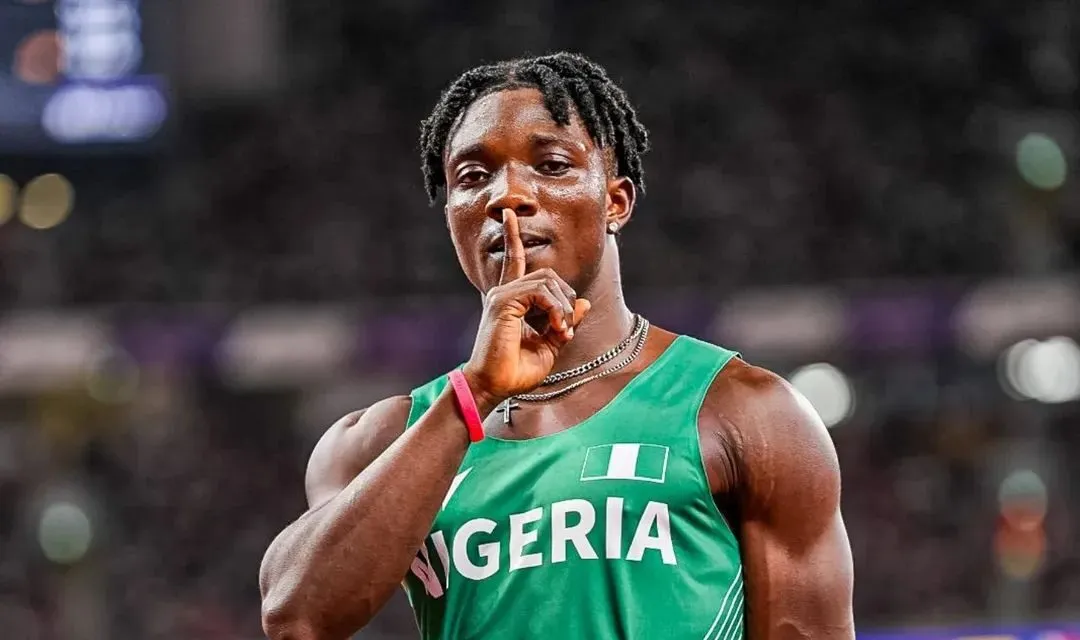
Championship target
Glasgow 2026
Ajayi heads to the Commonwealth Games not only as Nigeria’s fastest man, but as a genuine contender for a piece of national sprint history.
The championship mark Ajayi is capable of challenging.
Four hundredths faster than the existing Games record.
Nigeria has reached the podium before, but the men’s 100m title has remained out of reach.
The times say he can challenge the record. Glasgow will test whether he can turn that speed into a championship title.
Ajayi will arrive at the Commonwealth Games as Nigeria’s national record holder and one of the leading contenders in the men’s 100m. The Games run from July 23 to August 2, with athletics at Scotstoun Stadium from July 27 to August 1.
He will also be attempting to achieve something no Nigerian has managed in the event.
Davidson Ezinwa won silver in Auckland in 1990. Uchenna Emedolu finished second in Manchester in 2002, while Fasuba took silver in Melbourne four years later. Three Nigerians have reached the podium, but none has won gold.
Ajayi now has the chance to go one step further and become the first Nigerian man to win the Commonwealth Games 100m title.
Victory would also continue Africa’s recent hold on the event after South Africa’s Akani Simbine won at Gold Coast 2018 and Kenya’s Ferdinand Omanyala followed in Birmingham in 2022.
There is also a Games record within reach. Ato Boldon’s 9.88s, set for Trinidad and Tobago in Kuala Lumpur in 1998, remains the fastest time recorded in the Commonwealth Games men’s 100m.
Ajayi has already run faster than that mark three times. Those performances show that he can operate below the Games record, but championship racing will present a different test. Unlike a one-off meeting, the Commonwealth Games will require Ajayi to negotiate the rounds, recover between races and deliver again in the final.
That is where Sule’s emphasis on medals becomes important. Fast times establish an athlete’s potential. Championship medals show whether he can reproduce that form when the pressure is highest and there is no second opportunity.
Ajayi’s possible legacy may also extend beyond the individual event.
Soetan believes the present depth in Nigerian men’s sprinting has created an opportunity for the country to rebuild a competitive 4x100m relay team. If Ajayi can combine individual success with helping Nigeria return to major relay podiums, his influence will stretch beyond the national record bearing his name.
“If he continues on his current trajectory and adds major global medals while helping Nigeria achieve relay success, I believe he will be remembered as one of the greatest figures in the history of Nigerian athletics,” Soetan said.
“His story is still being written, but the opening chapters have been exceptional.”
Breaking the national record has answered one question: it has confirmed that Ajayi could run faster than every Nigerian before him. Glasgow will begin to answer the next one: how much can he win?
Before there was a national record, there was a football pitch in Ikorodu.
Before the NCAA and Diamond League meetings, there was a schoolboy who walked away from athletics because he thought it was too hard.
And before there were three 9.84s performances, there was a coach who went looking for him. Ajayi has not forgotten the woman who first pulled him away from football.
After returning recently to the country in preparation for the Commonwealth Games, he called Lawal and made her a promise.
“I’m going to spoil you,” he told her.
Lawal still speaks to him the way she did when he was a young athlete in Ikorodu.
“Look up at the sky,” she tells him. “You will get there.”
Five years after beginning his journey in athletics, Ajayi is already Nigeria’s fastest man.
Glasgow will show how much higher he can still climb.
© Bold Sports Media. All rights reserved. If sharing, kindly credit Bold Sports as the source and include a link to the original post. Unauthorised use is prohibited.