



The group stage of the AFCON 2025 in Morocco has done more than separate contenders from the rest, it has sketched a clear statistical portrait of a tournament shaped by attacking intent, control in possession and decisive individual moments.
Across 36 matches, 87 goals were scored at an average of 2.42 per game, a healthy return that reflects the ambition shown by teams from the opening kick-off to the final group fixtures on Wednesday night. Caution was rarely the dominant mood; instead, sides looked to impose themselves early, and often.
At the top of the scoring charts, Morocco’s Ayoub El Kaabi and Brahim Díaz, alongside Algeria captain Riyad Mahrez, finished the group phase level on three goals apiece. Each told a different story. El Kaabi’s sharp movement and ruthless finishing eased Morocco into the knockout rounds, Díaz added craft and precision from advanced midfield areas, while Mahrez’s calm authority underpinned Algeria’s flawless progress through the group stage.
If individual scorers caught the eye, Nigeria’s collective output stood out even more. The Super Eagles finished the group stage as the competition’s most prolific side with eight goals, converting 10 of their 21 shots on target.
More Read







They also dominated the ball, averaging 66% possession, the highest figure at the tournament underlining a blend of control and cutting edge. It was a profile of a team comfortable dictating tempo, pinning opponents back and turning sustained pressure into goals.
At the other end of the spectrum, Botswana endured a difficult campaign. They conceded seven goals, scored just once and averaged 38% possession, figures that highlight the gulf between sides able to control games and those forced to spend long spells chasing them.
As expected, intensity rose as qualification hung in the balance. A total of 126 yellow cards and six red cards were issued during the group stage, a reminder of the physical and emotional demands of tournament football.
The red cards were spread across several teams, often arriving in moments when games tipped on a single challenge or lapse in judgement, fine margins that proved costly in tightly contested groups.
While goals made the headlines, the assist numbers pointed to the importance of structured attacking play. Teams that progressed consistently found ways to unlock defences through movement and combination rather than relying solely on moments of solo brilliance.
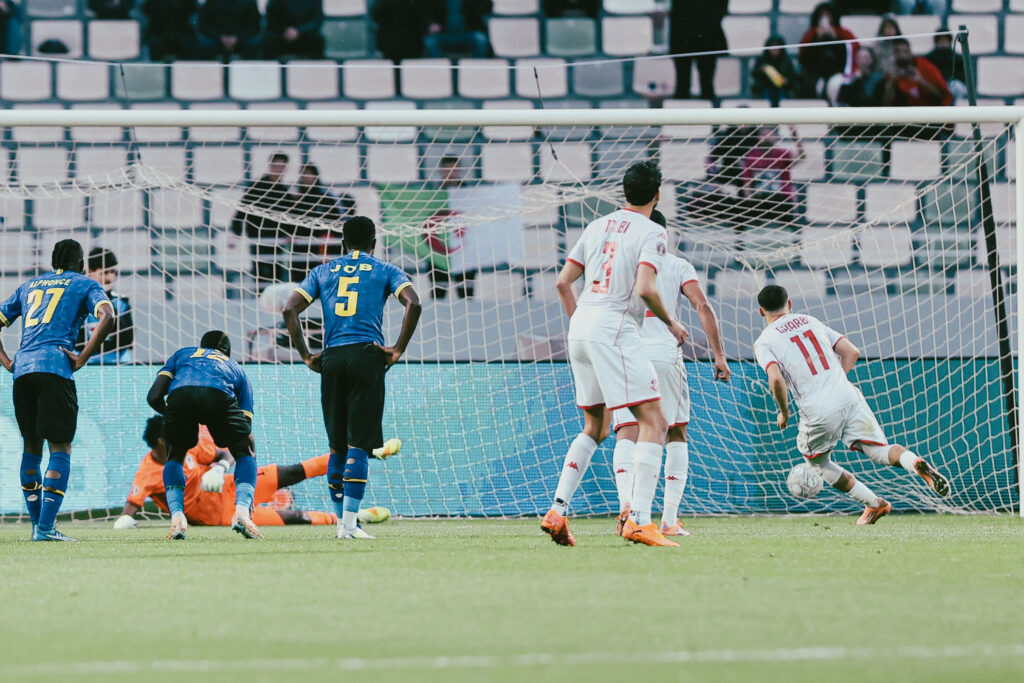
Penalties also played a decisive role. Tunisia led the way with two spot-kicks awarded, while Algeria, DR Congo, Egypt, Mali, Morocco, Mozambique, Senegal, South Africa, Sudan and Tanzania each earned one. In matches where space was scarce, these moments often shaped final outcomes.
Possession trends reinforced a broader pattern. Morocco and South Africa both averaged 62% of the ball, with Burkina Faso and Côte d’Ivoire close behind at 60%, suggesting that control in midfield has increasingly become a foundation for success at AFCON 2025.
As the tournament moves into the knockout rounds, the numbers offer a clear message. Attacking ambition has been rewarded, efficiency in both boxes has been decisive, and teams capable of balancing creativity with discipline have advanced.
With El Kaabi, Díaz and Mahrez setting the early scoring pace, and Nigeria emerging as the most dangerous attacking force of the group stage, the statistics point towards a knockout phase where control, composure and precision will matter more than ever.
The group stage is done, but the data suggests the most compelling chapters are still ahead.
© Bold Sports Media. All rights reserved. If sharing, kindly credit Bold Sports as the source and include a link to the original post. Unauthorised use is prohibited.