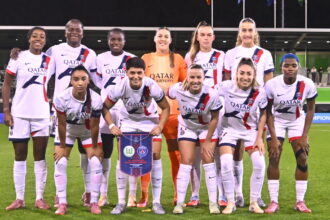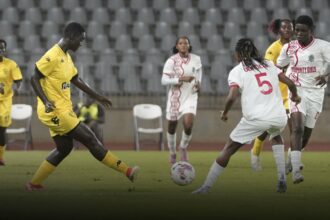


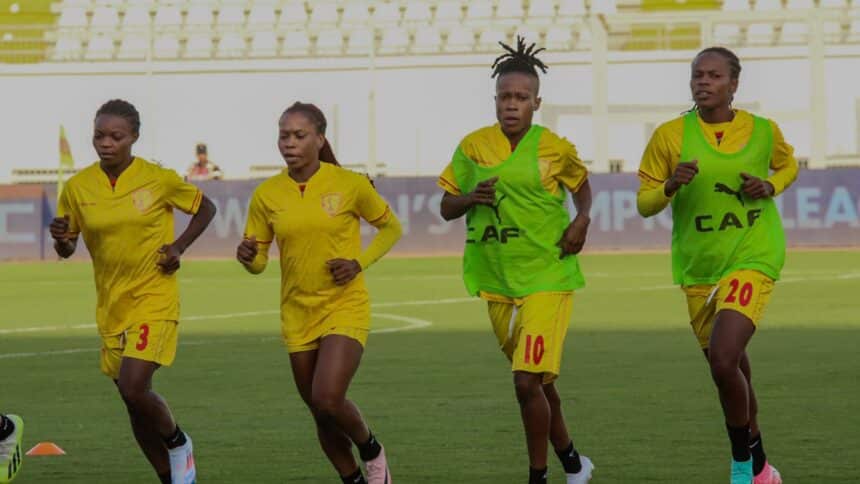
Edo Queens have won a penalty shootout, had the result cancelled, returned more than seven weeks later to complete extra time, lost the match and filed another petition.
That sequence sounds too strange for a continental qualification final, but it is how WAFU B’s representative at the 2026 CAF Women’s Champions League has been decided. Ampem Darkoa are now scheduled to represent the region, although Edo Queens insist the process that produced Thursday’s result was unfair.
The dispute began on September 5, when Edo Queens faced Ghana’s Ampem Darkoa in the WAFU B final. The match finished 2-2 and the officials sent both teams directly to penalties. Edo Queens won the shootout 4-1 and celebrated what appeared to be qualification for the Women’s Champions League.
There was one major problem: the competition rules required 30 minutes of extra time before penalties.
More Read






Why the shootout was cancelled
The failure to play extra time was an officiating error, not a decision made by either club. Nevertheless, it left WAFU B and CAF with a result obtained through a procedure that did not follow the regulations.
CAF cancelled the shootout and ordered the outstanding extra time to be played. Edo Queens challenged that decision, but the appeal was unsuccessful. The authorities maintained that the missing 30 minutes had to be completed before a winner could be recognised.
The authorities proceeded with the continuation. On October 29, Edo Queens and Ampem Darkoa met in Cairo to play the outstanding period.
Afishata Mohammed scored in the 92nd minute. There were no further goals, which gave Ampem Darkoa a 3-2 victory and the qualification place.
Edo Queens’ latest objections
Edo Queens have filed a fresh petition challenging the arrangements for the resumed match. The club has raised concerns about the decision to stage it in Cairo rather than at the original venue, the eligibility and availability of players, accommodation and communication surrounding the fixture.
The Nigerian club has also requested documents relating to the venue, match sheets, substitutions, disciplinary records and player eligibility. It wants the qualification slot suspended while those complaints are considered and has asked either for a full replay or for Edo Queens to be declared the regional representative if the matter cannot be resolved before the continental competition.
These are Edo Queens’ allegations. They have not been established as findings against WAFU B, CAF or Ampem Darkoa, and the club must support its case with the relevant regulations and evidence. CAF had not announced a decision on the new petition at the time of publication.
The timing makes the situation even more difficult. The CAF Women’s Champions League begins on November 1, with Ampem Darkoa scheduled to face USFAS Bamako on November 2. Any attempt to suspend or change the qualification place would affect the competition immediately.
Was it still the same match?
At the centre of the dispute is an unusual question: how do you restart only the extra time of a match nearly two months after the original fixture?
In principle, the continuation should preserve the sporting position that existed after 90 minutes. That includes the score, cautions, dismissals and substitutions already made. In practice, however, the passage of time changes almost everything else.
A player available in September may be injured, transferred or otherwise unavailable in October. Another player may have joined the club after the original match. Fitness levels may have changed, while both teams have had weeks to prepare specifically for a 30-minute contest rather than reaching extra time after a full match.
That does not automatically make the continuation invalid. It does explain why the rules governing player eligibility, substitutions and match administration must be transparent. Edo Queens are entitled to ask how those rules were applied, just as CAF is entitled to reject the petition if the arrangements complied with the competition regulations.
The original mistake made a perfect solution impossible. Allowing the penalty result to stand would have ignored the requirement for extra time. Replaying the entire match would have erased 90 valid minutes of football. Completing the missing period preserved the original score but could not reproduce the conditions under which extra time should have taken place.
The damage goes beyond one club
Whatever the eventual decision, this case has already exposed a damaging failure of competition administration. Two teams completed a final, contested a penalty shootout and watched one of them celebrate qualification before being told that a basic part of the match procedure had been omitted.
The consequences were not minor. Edo Queens and Ampem Darkoa had to maintain or rebuild their squads for another fixture, arrange new travel and prepare for a 30-minute contest with a Women’s Champions League place at stake.
The episode has also placed the players in an unfair position. Edo Queens celebrated a victory that was later removed. Ampem Darkoa then had to return and win a match that many observers believed had already ended. Neither group created the problem, but both have carried its consequences.
The latest petition should be considered quickly and transparently. If CAF believes the Cairo continuation was properly organised, it should explain the relevant rules and why Edo Queens’ objections do not alter the result. If any of the club’s claims are established, the authorities will have to determine whether a remedy is possible without disrupting a competition that is already beginning.
Ampem Darkoa currently hold the qualification place. Edo Queens have not accepted that the process is over.
A final that should have been remembered for football has instead become a case study in what happens when one administrative mistake is allowed to reshape an entire competition.
© Bold Sports Media. All rights reserved. If sharing, kindly credit Bold Sports as the source and include a link to the original post. Unauthorised use is prohibited.