

When a footballer pulls on his country’s shirt, the emotion belongs to the nation. But the financial consequences of what happens next can belong somewhere else entirely.
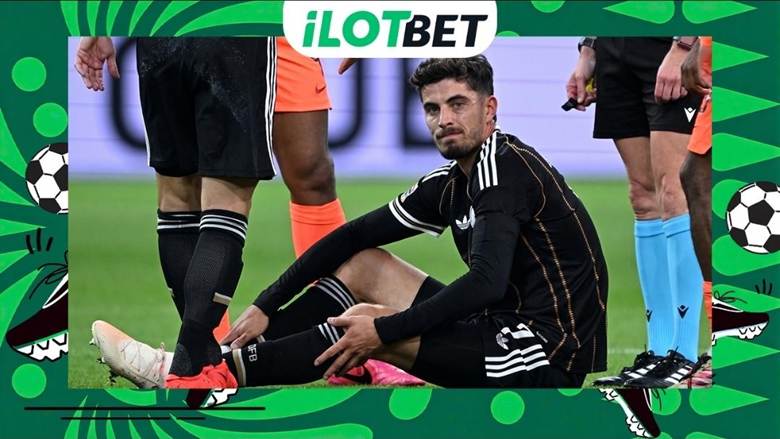
A player can leave his club perfectly fit, join his national team for an international break and return with a serious injury that keeps him out for weeks or even months. His club may have had no control over how, where or when the injury happened, yet it remains the player’s employer and, in normal circumstances, continues to carry his contractual obligations.
That raises an obvious question, if a player is injured while representing his country, who actually pays his wages?
The short answer is that the player’s club normally continues to pay his salary. But that is only the beginning of the story. FIFA has a mechanism designed to protect clubs from some of the financial consequences of injuries suffered by players on international duty, and the rules are more extensive than simply covering an injury sustained during a competitive match.
More Read






The club does not stop paying the player
Professional footballers are employees of their clubs. Their contracts generally provide for a fixed salary to be paid regardless of whether they are currently available for selection because of an ordinary football injury.
So, if a player earning £100,000 a week suffers a hamstring injury while playing for his country and is subsequently ruled out for two months, the club does not normally stop paying the £100,000 simply because the injury occurred while he was away on international duty.
The player’s employment contract remains in force. His absence from the pitch does not, by itself, remove the club’s obligation to pay the wages agreed in that contract.
This is one reason international football can create a difficult situation for clubs. They are required to release eligible players for international duty under FIFA’s regulations, but they can then be left without the services of an important employee while continuing to meet the financial commitments attached to him. FIFA itself has acknowledged the need to protect clubs from losses arising from injuries suffered by players while representing their countries.
That is where the FIFA Club Protection Programme comes in.
FIFA can compensate the club
The Club Protection Programme is essentially designed to soften the financial blow suffered by a club when one of its professional players is injured while on qualifying international duty.
The crucial distinction is that the money is paid to the club, not directly to the player as a replacement for his salary.
Under the programme’s rules, compensation is based on the fixed salary that the club pays directly to the player under his written contract. Bonuses and other variable forms of remuneration are treated differently. The current programme provides compensation of up to €7.5m per player per accident, with a maximum daily compensation of €20,548, for up to 365 days, subject to the programme’s conditions and overall limits.
But there is an important catch.
The programme is not activated simply because a player gets injured.
The injury generally has to qualify as an accident, and the resulting temporary total disablement must prevent the player from playing for his club for more than 28 consecutive days. The compensation therefore does not begin immediately; the first 28 days constitute an excess period under the programme.
In practical terms, the arrangement can look like this:
A player earns €5m a year. He suffers a qualifying injury on international duty and cannot play for his club for three months. The club continues to meet its contractual obligations to the player. If the injury satisfies the Club Protection Programme’s conditions, FIFA’s programme can then provide compensation to the club based on the player’s eligible fixed salary for the covered period.
So the system is not really “FIFA pays the player’s wages.”
It is closer to:
The club pays the player → FIFA compensates the club for a qualifying loss.
Follow the biggest football stories and back your predictions with iLOTBET.
© Bold Sports Media. All rights reserved. If sharing, kindly credit Bold Sports as the source and include a link to the original post. Unauthorised use is prohibited.