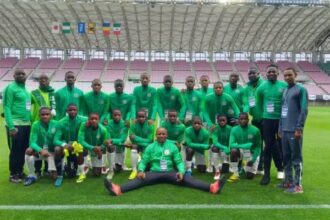


Eight years ago in Tenerife, D’Tigress defeated Greece 57-56 and became the first African team to reach the quarter-finals of the FIBA Women’s Basketball World Cup.
Nigeria had entered the competition without the history or reputation of the established global powers. By the time the tournament ended, they had changed what an African team could expect to achieve on that stage.
For Ezinne Kalu, one of the players returning to the World Cup with Nigeria in Berlin, the victory over Greece remains an important point in the team’s development.
“That one was a stepping stone for us,” she told FIBA.
More Read






The result did more than take Nigeria into the last eight. It demonstrated that an African side could overcome European opposition in a knockout match at the highest level.
D’Tigress have not played at the World Cup since.
They qualified for the 2022 tournament but were replaced by Mali after the Nigerian government withdrew the country’s basketball teams from international competition. By the time that decision was reversed, Nigeria’s place at the tournament had been lost.
Their absence from the World Cup, however, did not stop the team’s progress elsewhere.
From African champions to Olympic history
D’Tigress have continued to dominate African basketball and arrived at the Paris 2024 Olympics as a team capable of competing beyond the continent.
In Paris, they defeated Australia and Canada to reach the quarter-finals, becoming the first African women’s basketball team to advance that far at the Olympic Games.
The run ended against the United States, but Nigeria had established a new standard.
“We broke some records, set some standards,” Kalu said while reflecting on the team’s performance.
That Olympic campaign changed the way opponents viewed Nigeria. D’Tigress can no longer expect to arrive at a major tournament unnoticed.
They enter the 2026 World Cup ranked eighth in FIBA’s official world ranking, ahead of several countries with deeper professional leagues and longer histories at the competition.
That position reflects what Nigeria have achieved. It also brings a different kind of pressure.
Preparation raises questions
Nigeria’s preparations for Berlin have not been convincing.
D’Tigress recorded several heavy defeats during their warm-up programme, including games against leading European opposition. Those results contributed to Nigeria falling from eighth to 10th in FIBA’s final pre-tournament power ranking.
The power ranking is subjective and separate from the official world ranking, but FIBA’s assessment reflected the uncertainty created by the preparation games.
Nigeria’s intensity, physical defence and ability to force turnovers have traditionally made them difficult opponents. The concern is whether the team have had enough time together to rediscover those qualities before the tournament begins.
Kalu believes the warm-up results have not shown what the complete team can produce.
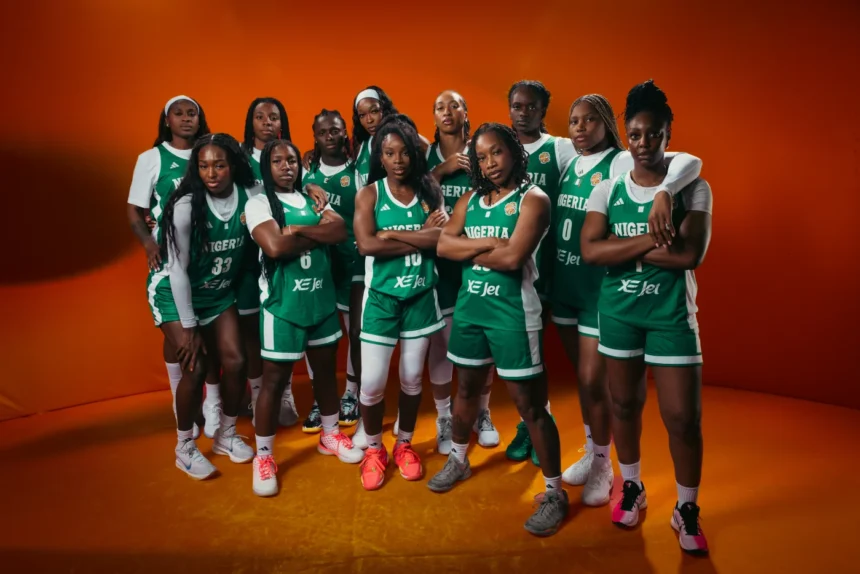
The final squad combines veterans from Nigeria’s rise with players who bring a different kind of energy. Kalu, Promise Amukamara, Pallas Kunaiyi-Akpanah and captain Amy Okonkwo provide experience, while Elizabeth Balogun and the newer members of the group offer fresh options.
For head coach Rena Wakama, the immediate task is turning those individual strengths into a functioning team quickly.
Korea and Hungary will shape Nigeria’s tournament
D’Tigress begin against Korea on Friday before facing Hungary on Saturday and France on Monday.
France are the strongest team in Group B and one of the leading contenders for the title. Nigeria’s clearest route into the next round will therefore depend on the opening matches against Korea and Hungary.
Korea have lost influential centre Jisu Park, but still possess experienced scoring options in Leeseul Kang and Jihyun Park.
Hungary return to the World Cup after 28 years and will be built around Dorka Juhasz. Their size could present a difficult test for Nigeria inside the paint.
Both games are winnable. Neither should be treated as automatic.
A victory over Korea would settle Nigeria and remove some of the anxiety created by the warm-up results. Beat Hungary the following day and D’Tigress would place themselves in a strong position before meeting France.
Lose either of the opening matches and the route becomes considerably more difficult.
That is the challenge of a short group stage. Preparation, selection and tactical decisions made over several weeks can be judged within 48 hours.
A new opportunity for African basketball
Nigeria and Mali are Africa’s representatives in Berlin.
Their performances will carry significance beyond their individual results. Every victory strengthens the argument that African women’s basketball deserves greater investment, preparation and representation at global competitions.
D’Tigress have already carried that responsibility successfully.
They were the first African team to reach the World Cup quarter-finals. Six years later, they became the first African women’s basketball team to reach the Olympic quarter-finals.
Berlin presents the next question.
Can Nigeria progress from occasionally creating history to consistently competing among the world’s leading teams?
The answer will not be found in their reputation, ranking or previous achievements. It will be determined by how quickly Wakama’s players rediscover their identity.
Nigeria’s best teams defend aggressively, compete for every loose ball and turn matches into uncomfortable contests. That approach carried them through Tenerife and Paris.
They will need it again.
D’Tigress are returning to a competition they should never have missed in 2022. They return with greater experience, a stronger reputation and more expected of them.
Kalu’s message is simple.
“We are going to surprise a lot of teams.”
Eight years ago, Nigeria surprised the basketball world. This time, their task is to show that progress should no longer be surprising.
© Bold Sports Media. All rights reserved. If sharing, kindly credit Bold Sports as the source and include a link to the original post. Unauthorised use is prohibited.