

The Nigeria Football Federation says it has secured an $8.5m-a-year kit agreement with Adidas from 2027.
If every part of the package is delivered as announced, it would represent a considerable improvement on the federation’s existing relationship with Nike.
The reported deal includes $4.5m in annual cash payments and approximately $4m worth of kits and equipment. The NFF would also receive a 20 per cent royalty on merchandise sales.
Former NFF president Ibrahim Gusau disclosed the figures shortly before leaving office with the rest of the Executive Committee.
More Read



“Adidas will pay Nigeria $4.5 million every year in cash and then they will provide kit worth $4 million every year,” he said.
While the headline is impressive, understanding what the agreement is genuinely worth requires more information.
Cash and equipment are not the same thing
The first distinction is between the $4.5m cash payment and the $4m equipment allocation.
Cash can be used by the federation to fund camps, travel, match bonuses, coaching appointments, administration and other expenses.
Equipment is valuable, but it is not revenue that the NFF can spend.
The practical value of that allocation will depend on how it is calculated and whether the supplied products meet the needs of Nigeria’s national teams.
A manufacturer may value equipment using its recommended retail price, its wholesale value or the actual cost of production. Those figures can be significantly different.
If the $4m is based on retail prices, the real production cost to Adidas would be much lower. That would not make the equipment unimportant, but it would change how the overall package should be understood.
There is also the question of whether Nigeria can use the entire allocation effectively.
The federation manages the Super Eagles, Super Falcons, youth teams and other national sides. Each requires match kits, training wear, travel clothing and equipment in different sizes and quantities.
Gusau said the existing Nike allocation was insufficient to cover those demands and that the NFF had been required to purchase additional kits.
The new contract should therefore establish what happens if Nigeria exhausts its annual allocation. It should also clarify whether unused equipment value can be carried into another year or converted into another form of support.
What does the royalty cover?
The 20 per cent merchandise royalty could become one of the most valuable elements of the agreement.
Nigeria’s national-team shirts have demonstrated considerable international appeal. The 2018 World Cup kit became a global commercial success and attracted long queues before its release.
However, a royalty percentage means little without knowing what it applies to.
Is the NFF entitled to 20 per cent of gross merchandise sales or 20 per cent after production, distribution, marketing and retail costs have been deducted?
Does the royalty cover every Nigeria-branded product or only replica shirts?
Does it apply to sales worldwide or only within Nigeria?
Are sales through Adidas stores, independent retailers and online platforms treated equally?
The agreement must also establish how frequently Adidas reports its sales and what right the NFF has to audit those figures.
Without those protections, the federation could be told what it has earned without having an independent way to verify the calculation.
Distribution will determine the commercial upside
Nigeria’s popularity alone will not guarantee strong merchandise revenue.
Supporters must be able to find and afford the products.
The previous success of Nigeria kits has often been accompanied by limited availability in the domestic market. That creates room for counterfeit products and prevents the federation from benefiting fully from demand.
A successful Adidas partnership would need more than a new shirt every two years.
It would require a clear retail strategy covering physical stores, online sales, international distribution and licensed merchandise at different price levels.
If official shirts are priced beyond the reach of most Nigerian supporters, counterfeiters will continue to dominate the local market.
The NFF and Adidas should therefore explain whether the partnership includes locally accessible products and whether any part of the range will be manufactured or distributed through Nigerian businesses.
The 20 per cent royalty will only produce meaningful returns if there are enough official products available for people to buy.
Which national teams are covered?
The announcement referred generally to Nigeria’s national teams.
The contract should state exactly what that means.
Does the $4m allocation cover the Super Eagles and Super Falcons equally? Are the Falconets, Flying Eagles, Golden Eaglets, Flamingos and Olympic teams included?
What about Nigeria’s beach football and futsal teams?
The question matters because equipment agreements can appear generous while directing most of their commercial and operational attention towards the senior men’s team.
The Super Falcons and Nigeria’s youth teams compete regularly in major international tournaments. They should not have to wait for leftover allocations after the Super Eagles have been supplied.
The agreement should contain clear obligations for every covered team, not a general promise that leaves distribution to the federation’s discretion.
Who authorised the agreement?
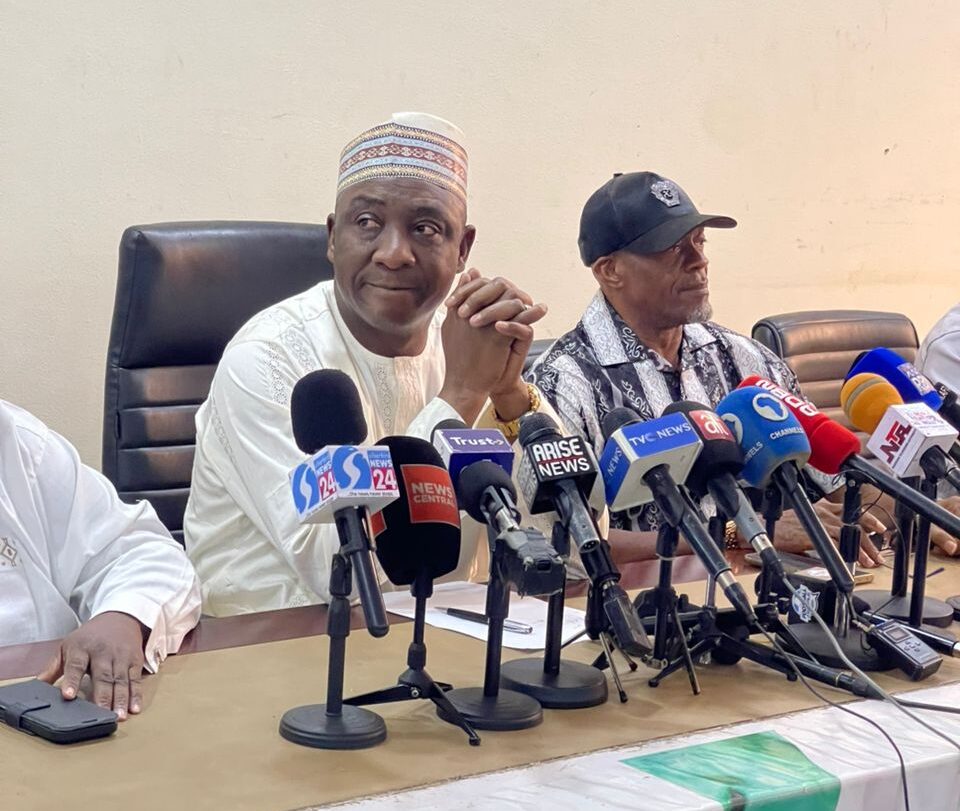
The timing creates an additional governance question.
Gusau announced that the contract had already been signed shortly before he and the Executive Committee resigned.
A properly executed commercial agreement does not become invalid simply because the officials who negotiated it have left office. However, the new NFF administration and the reform process must establish what was approved, by whom and under which provisions of the federation’s statutes.
The duration of the agreement has not been made public. Neither have any termination clauses, performance bonuses, renewal options or commercial restrictions placed on the federation.
There is also no corresponding public announcement from Adidas as of Thursday night.
That does not mean the agreement does not exist. Gusau said its formal announcement had originally been planned for September.
It does mean that the available contractual information is coming from one side.
Until Adidas confirms the partnership, the responsible description is that the NFF says it has agreed an $8.5m-a-year package.
Publish the essential details
Commercial contracts often contain confidential information. Nobody should expect the NFF to publish every page.
The federation can still disclose the information Nigerians need to assess the deal.
That should include its duration, the guaranteed annual cash payment, the basis for valuing the equipment, the teams covered, the definition of merchandise revenue and the mechanism for auditing royalties.
The NFF should also explain how the income will be recorded and reported in its audited accounts.
The proposed agreement could be an important commercial achievement. A rise from the terms Gusau attributed to Nike to $4.5m in cash and $4m in equipment would give the federation substantially more support.
But announcing a large figure is only the first step.
The real value of the Adidas agreement will be determined by the contract, the products supporters can buy and the transparency with which the money is managed.
© Bold Sports Media. All rights reserved. If sharing, kindly credit Bold Sports as the source and include a link to the original post. Unauthorised use is prohibited.