

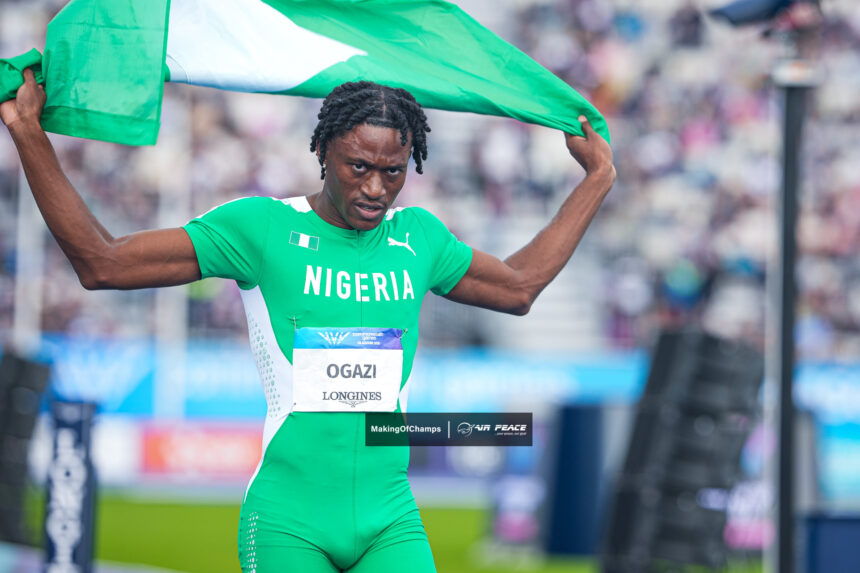
By the time Samuel Ogazi settled into his blocks for the Commonwealth Games 400m final in Glasgow, Nigeria’s men had already enjoyed quite a championship, one that had not been experienced in years before now.
Chukwuebuka Enekwechi had won the shot put. Ezekiel Nathaniel had taken the 400m hurdles title. Udodi Onwuzurike had come out of lane eight to win silver in the 200m. Kanyinsola Ajayi had returned Nigeria to the 100m podium for the first time in 20 years.
Ogazi then added the biggest statement of his own, pulling away from the field to win the 400m in 44.25s.
Three Nigerian men had become Commonwealth champions in three different events.
More Read






Add Ajayi’s 100m bronze, Onwuzurike’s 200m silver and the bronze eventually awarded to the 4x100m team after Canada successfully appealed its initial disqualification, and the final count was six medals from men’s track and field events.
For Nigerian athletics, that is unusual territory.
For much of the last three decades, the country has arrived at major championships with its biggest expectations resting on women. From Mary Onyali and Falilat Ogunkoya to Blessing Okagbare, Ese Brume and Tobi Amusan, Nigerian women have produced most of the individual medals that have kept the country relevant on the global stage.
Glasgow however offered a glimpse of something different. And it had been coming.
The gap used to be enormous
Nigeria has won 14 Olympic medals in track and field. Nine were won by women.
The five won by men all came in relays.
No Nigerian man has ever won an individual athletics medal at the Olympic Games.
The women’s list is considerably richer. Chioma Ajunwa became Nigeria’s first Olympic champion when she won the long jump in Atlanta in 1996. Onyali won two Olympic sprint medals. Ogunkoya, Glory Alozie, Okagbare and Brume all reached the podium individually.
Atlanta was perhaps the high point. Ajunwa won gold. Onyali took bronze in the 200m. Ogunkoya won 400m bronze and was part of the 4x400m team that took silver.
Four athletics medals for Nigeria. All four came from women.
Different athletes carried that responsibility in later years.
Okagbare became one of the leading sprinters and long jumpers of her generation. Brume won Olympic bronze in Tokyo and followed it with medals at the World Championships.
Then Amusan took it even further. Her victory in the 100m hurdles at the 2022 World Championships made her Nigeria’s first outdoor world champion in athletics. She broke the world record in the semi-final, running 12.12s.
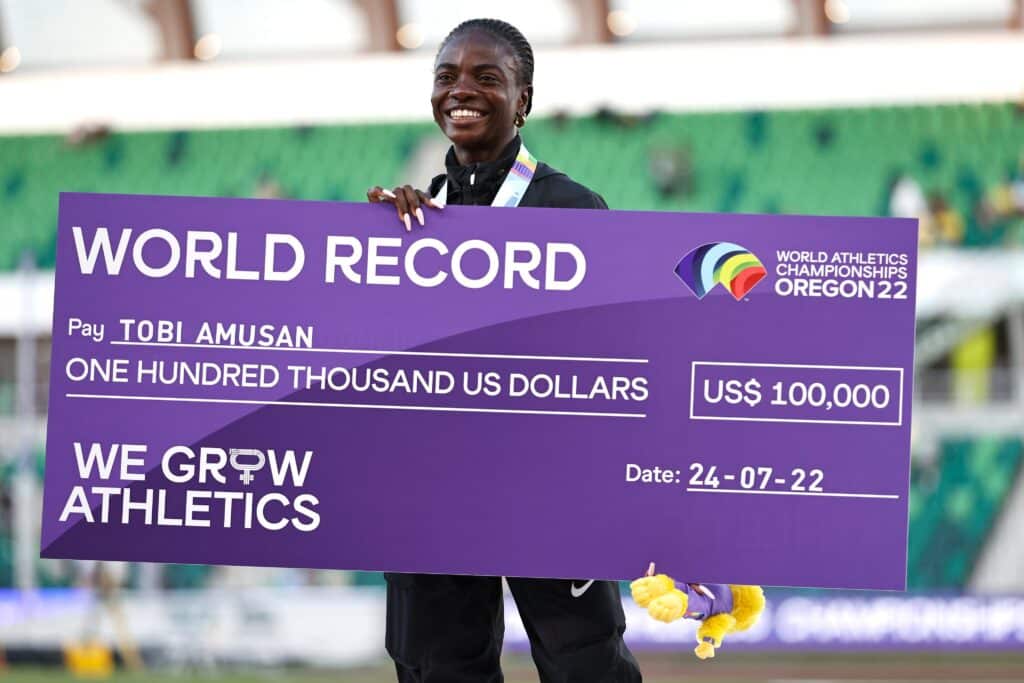
Amusan and Brume were Nigeria’s only medallists at those championships. At the next World Championships in Tokyo in 2025, Amusan was again the only Nigerian to leave with a medal after taking silver.
Even the last Commonwealth Games before Glasgow showed how dependent Nigeria had become on its women.
In Birmingham in 2022, the only medal won by Nigerian men in track and field was bronze in the 4x100m relay.
Amusan, Brume and Chioma Onyekwere won individual gold medals. Favour Ofili won 200m silver and Obiageri Amaechi took discus bronze. The women’s 4x100m team also finished first before the result was later stripped following Grace Nwokocha’s doping violation.
Four years later, the men went from one Commonwealth medal to six.
But Glasgow is only the latest part of the story.
Paris and Tokyo had already provided clues
At the Paris Olympics in 2024, six Nigerians reached individual track and field finals.
Two were men.
Enekwechi finished sixth in the shot put. Ogazi, still only 18 at the time, reached the 400m final and finished seventh.
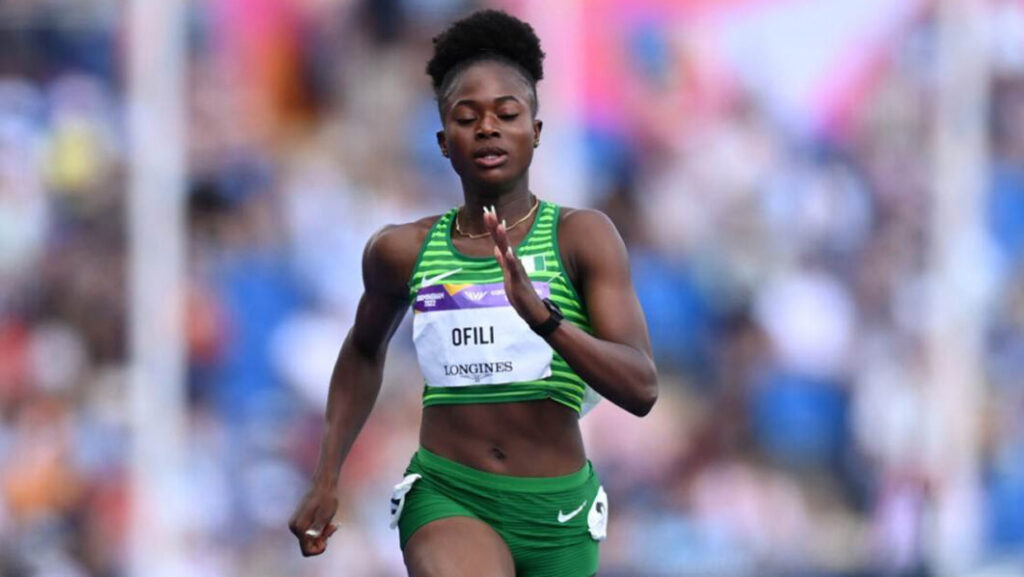
Ofili was sixth in the women’s 200m, while Brume, Ruth Usoro and Prestina Ochonogor were in the final of the long jump.
A year later at the World Championships, the difference was even clearer.
Nathaniel finished fourth in the 400m hurdles. Enekwechi was fifth in the shot put. Ajayi made the 100m final and finished sixth.
Amusan took silver in the hurdles.
Put Paris and Tokyo together and Nigerian men produced five individual top eight finishes. The women produced five.
This generation looks different
Nigeria has never lacked talented male athletes.
Davidson Ezinwa, Olapade Adeniken, Sunday Bada, Uchenna Emedolu, Olusoji Fasuba and others enjoyed significant careers.
What Nigeria has not had often enough is this many men operating at or close to world-class level at the same time, and across different events.
Ajayi is the clearest example in the sprints. He broke Fasuba’s 20-year Nigerian 100m record when he ran 9.84s in May. He has since matched that time twice, including his Diamond League victory in London.
The significance is not simply that Ajayi has run 9.84. It is that the time no longer looks like an isolated performance.
Before Glasgow, he had already made a World Championship 100m final. In Scotland, he added a major senior medal.
Ogazi’s rise has been even more dramatic. He went to the Paris Olympics as a teenager and made the final. This year, he ran 43.38s to win the NCAA title, smashing the Nigerian record and moving to fourth on the world all-time list over 400m.
He arrived in Glasgow as one of the favourites and ran like one.
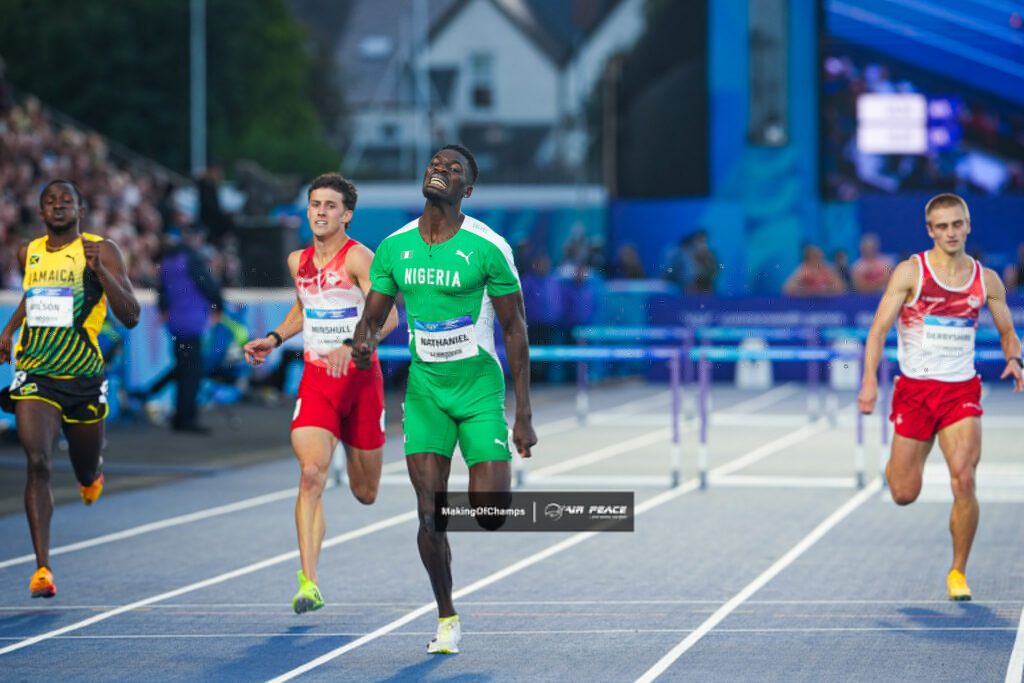
Nathaniel has followed a similar path. He was sixth at the Commonwealth Games in Birmingham four years ago. In Tokyo last year, he ran a Nigerian record of 47.11s and missed a World Championship medal by one place. Glasgow provided his first senior international title.
Onwuzurike has been around the conversation for longer. A world U20 champion in 2021, he owns a 19.76-second personal best in the 200m but has not always been able to reproduce that form at major senior championships.
His Glasgow silver was therefore important.
“I am not where I want to be right now,” Onwuzurike admitted after the race.
Enekwechi is the senior man in the group. He won Commonwealth silver as far back as 2018, finished fourth in Birmingham and has remained Nigeria’s most consistent male field athlete through several championship cycles.
Last year, his 22.10m throw made him the first African shot putter beyond 22 metres.
He was sixth at the Paris Olympics, fifth at the Tokyo World Championships and finally climbed to the top of a major championship podium in Glasgow.
Five athletes. Five events. That is where the depth becomes difficult to ignore.
Behind them, there are other signs. Adekalu Fakorede has joined Nigeria’s sub-10-second sprinters, while Chinecherem Nnamdi continues to push the country forward in the javelin.
This is no longer simply a good relay generation.
And the women?
Nigeria’s women won five individual track and field medals in Glasgow.
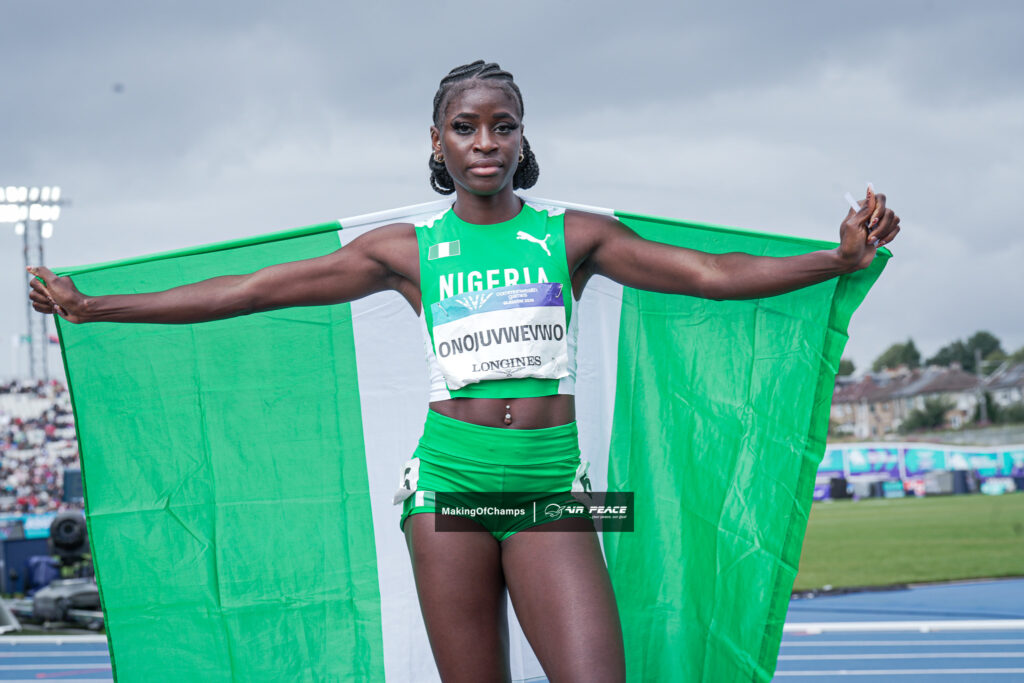
Jessica Oji and Ruth Usoro took silver in the shot put and long jump. Ella Onojuvwevwo won bronze in the 400m, Temitope Adeshina did the same in the high jump and Amusan reached the 100m hurdles podium despite concerns about her knee following a fall in training camp.
Onojuvwevwo has already run 49.47s this season, placing her among the fastest Nigerian women ever over 400m.
Adeshina is the national record holder in the high jump. Usoro remains competitive in the jumps. Oji, still only 19, has barely begun her senior career.
And Amusan remains Amusan, a world record holder, former world champion and the athlete who delivered Nigeria’s only medal at last year’s World Championships.
The women have not suddenly stopped producing. What has disappeared is the huge gap between both sides of the team.
A generation built largely in America
There is one obvious connection between many of the names driving this revival.
College athletics in the United States.
Ajayi developed at Auburn. Nathaniel at Baylor. Ogazi at Alabama. Onwuzurike went through Stanford. They have trained in environments where elite coaching, strength and conditioning, sports science and high-level competition are part of the weekly routine.
The pathway is hardly unique to the men. Amusan, Ofili, Usoro, Onojuvwevwo and Adeshina have also passed through American universities.
What is new is the number of Nigerian men emerging from that system together.
That also makes it difficult to give Nigeria’s domestic athletics structure all the credit for what is happening. The country is benefiting from the talent. Much of the finishing work is being done elsewhere.
Enekwechi offered an interesting glimpse into another part of the equation in Glasgow. Comparing the preparation for the Commonwealth Games with previous championships, he said the programme had been more focused this time, with “all hands on deck towards the big Commonwealth Games.”
Talent matters. So does what happens around it.
One hurdle remains
For everything Ajayi, Ogazi, Nathaniel, Onwuzurike and Enekwechi have achieved, there is still a line none has crossed. An individual Olympic or World Championship podium.
They have come close. Nathaniel was fourth in Tokyo. Enekwechi has finished sixth and fifth at the last two global championships. Ajayi has made a World Championship final. Ogazi has made an Olympic final.
Glasgow turned those near-misses into gold, silver and bronze. Doing it at an Olympics or World Championships would be different.
Nigeria’s women have done that repeatedly. It is why Ajunwa, Onyali, Ogunkoya, Alozie, Okagbare, Brume and Amusan occupy the place they do in the history of Nigerian athletics.
The men have the times. They have the rankings. They are making the finals. Now they need the global medals.
Until then, talk of a complete takeover is probably premature. But something has undoubtedly changed. Four years ago in Birmingham, Nigeria’s men won one track and field medal.
Since then, Ogazi has become one of the fastest 400m runners in history. Ajayi has broken the national 100m record. Nathaniel has broken the 400m hurdles record. Enekwechi has broken the African shot put record. Onwuzurike has returned to a major championship podium.
Then Glasgow brought three individual gold medals and six medals from men’s events.
The women have not gone anywhere. The men have finally caught up. For Nigerian athletics, that may be the more important story.
© Bold Sports Media. All rights reserved. If sharing, kindly credit Bold Sports as the source and include a link to the original post. Unauthorised use is prohibited.