
FIFA has accepted the resignations of the Nigeria Football Federation’s principal officers and agreed to continue discussions with Nigerian authorities on a roadmap for comprehensive football reforms.
The development removes some of the uncertainty surrounding the leadership changes at the NFF and suggests that the proposed restructuring will proceed in consultation with FIFA and the Confederation of African Football.
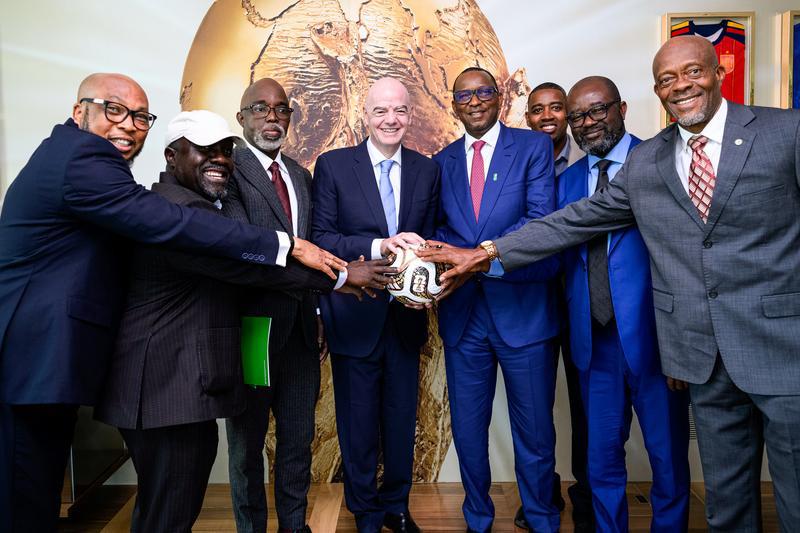
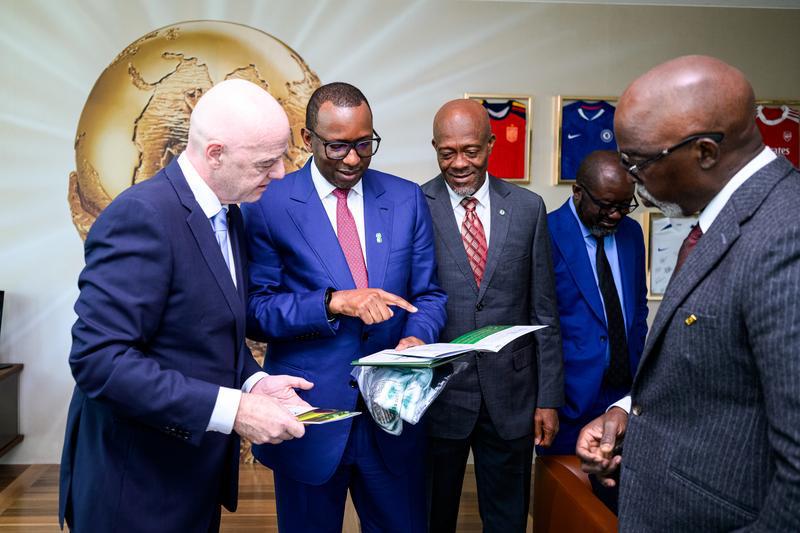
The NFF Communications Department announced the outcome following a meeting at FIFA headquarters in Zurich, Switzerland, on Tuesday.
However, FIFA had yet to issue a separate public statement on the meeting at the time of writing.
More Read



Former NFF president Ibrahim Musa Gusau, general secretary Mohammed Sanusi and members of the executive committee resigned on August 27 following mounting criticism over Nigeria’s failure to qualify for several major tournaments.
The Super Eagles missed the expanded 2026 World Cup, while the Super Falcons failed to qualify for the 2027 Women’s World Cup, ending Nigeria’s run of appearing at every edition since the competition began in 1991. The Flying Eagles also failed to qualify for the next Under-20 Africa Cup of Nations.
The leadership departures occurred on the same day President Bola Tinubu directed a comprehensive reform of Nigerian football, with a focus on governance, administration, stakeholder representation, development structures, domestic competitions and accountability.
The NFF subsequently appointed former deputy general secretary Emmanuel Ikpeme as acting general secretary and suspended preparations for the elective congress scheduled for September 27.
A new electoral process is expected to begin after the proposed reforms have been concluded in consultation with FIFA and CAF.
Tuesday’s meeting was therefore important because FIFA prohibits undue government interference in the affairs of its member associations. Any restructuring conducted without consultation could have exposed Nigeria to disciplinary action or suspension from international football.
According to the NFF, representatives of FIFA, CAF, the National Sports Commission and the federation’s interim administration agreed to continue engagements aimed at developing short-, medium- and long-term reforms.
The discussions are expected to produce a framework for the transition and determine how a new NFF leadership will emerge.
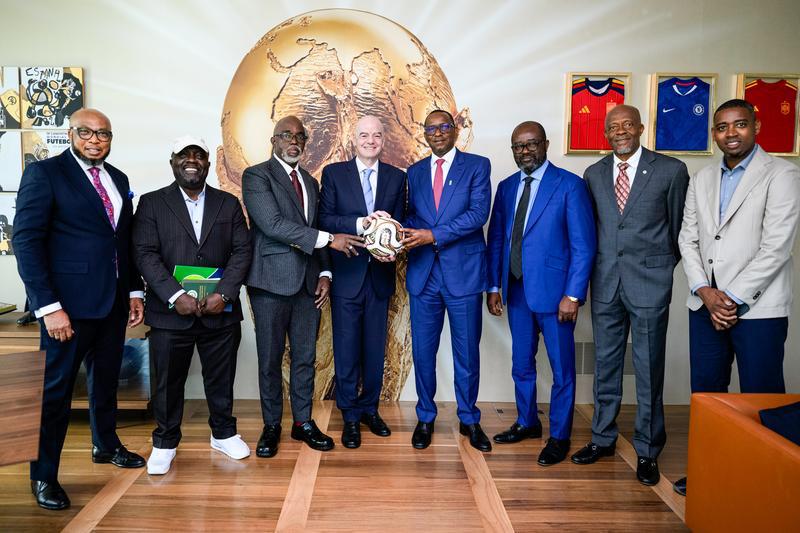
The Nigerian delegation was led by NSC chairman Shehu Dikko and included the commission’s director-general, Bukola Olopade; acting NFF general secretary Ikpeme; and the federation’s director of legal services, Okey Obi.
Former NFF president and former FIFA Council member Amaju Pinnick also attended in his capacity as special adviser to the CAF president and deputy chairman of FIFA’s Men’s National Teams Competitions Committee.
CAF second vice-president Kurt Okraku and FIFA director of member associations for Africa Gelson Fernandes were also listed among those present.
The NFF said the parties agreed that the eventual process must produce a more inclusive federation operating in a stable environment capable of delivering better results on and off the pitch.
“Mutual engagement among the National Sports Commission, the NFF administration and the Confederation of African Football is ongoing with FIFA on the comprehensive reforms of Nigeria football,” Dikko said.
The NSC chairman added that the roadmap would be developed in accordance with the relevant statutes, rules and regulations.
The Zurich talks do not yet provide the full details of the reform programme, the structure that will supervise the transition or a timetable for the next NFF election.
They nevertheless represent the clearest indication so far that FIFA has recognised the leadership changes and is prepared to participate in determining what comes next.
Attention will now turn to the contents of the roadmap and whether the process goes beyond replacing office holders to address the structural problems that have repeatedly affected Nigerian football.
The reform will also be judged by the extent to which it broadens stakeholder representation, strengthens financial accountability, improves domestic competitions and creates sustainable development pathways for players, coaches and administrators.
© Bold Sports Media. All rights reserved. If sharing, kindly credit Bold Sports as the source and include a link to the original post. Unauthorised use is prohibited.