


“It was a game we could have put away earlier,” Houston Dynamo coach admitted after the final whistle when I asked him about the chaotic nature of the match. “We had our chances, but the back-and-forth nature of the first half kept things interesting. We let off chances we should have taken, but it’s a good response to the last game, and we’re moving forward.”
Those words captured the night perfectly.
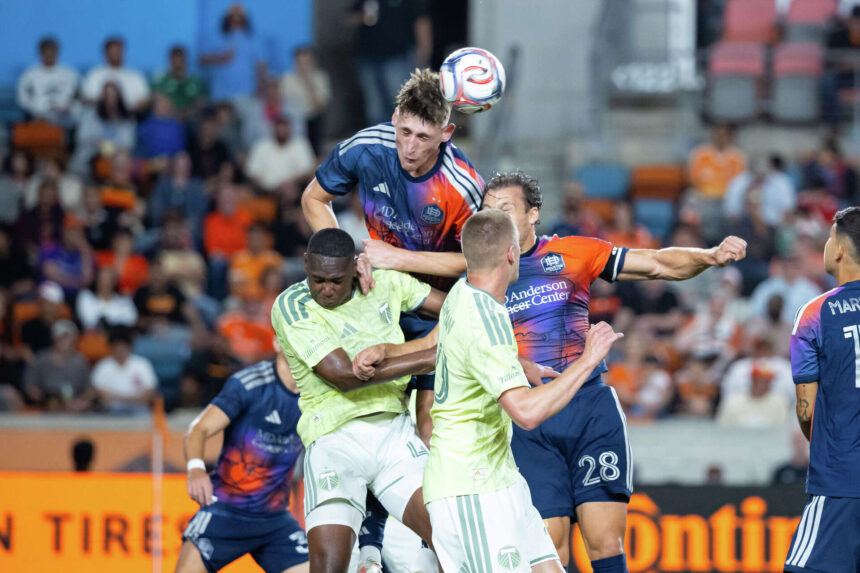
What unfolded at Shell Energy Stadium was far more than a routine MLS fixture. It was a wild, emotionally charged, and tactically fascinating battle between the Houston Dynamo and the Portland Timbers that ultimately ended 3–2 in Houston’s favor, capped by a dramatic stoppage-time winner.
From my vantage point covering the match, the game revealed two realities about this Houston team. The Dynamo showed genuine attacking ambition and resilience. But they also exposed moments of tactical vulnerability that a more ruthless opponent might have punished more severely.
More Read






Still, football is rarely decided by neat tactical diagrams or statistical models. It is decided by mentality and timing. On this night, Houston delivered both when it mattered most.
A Game That Refused to Settle
From kickoff, both teams made it clear they were not interested in cautious football. The tempo was high, transitions were quick, and the match quickly developed into the kind of end-to-end contest that MLS has become known for.
Houston immediately looked eager to impose themselves in the attacking third. The Dynamo frequently pushed numbers forward and consistently found space near Portland’s penalty area. By the end of the night, Houston recorded 28 touches inside Portland’s box, nearly identical to Portland’s 27, which shows how evenly matched the attacking intentions were.
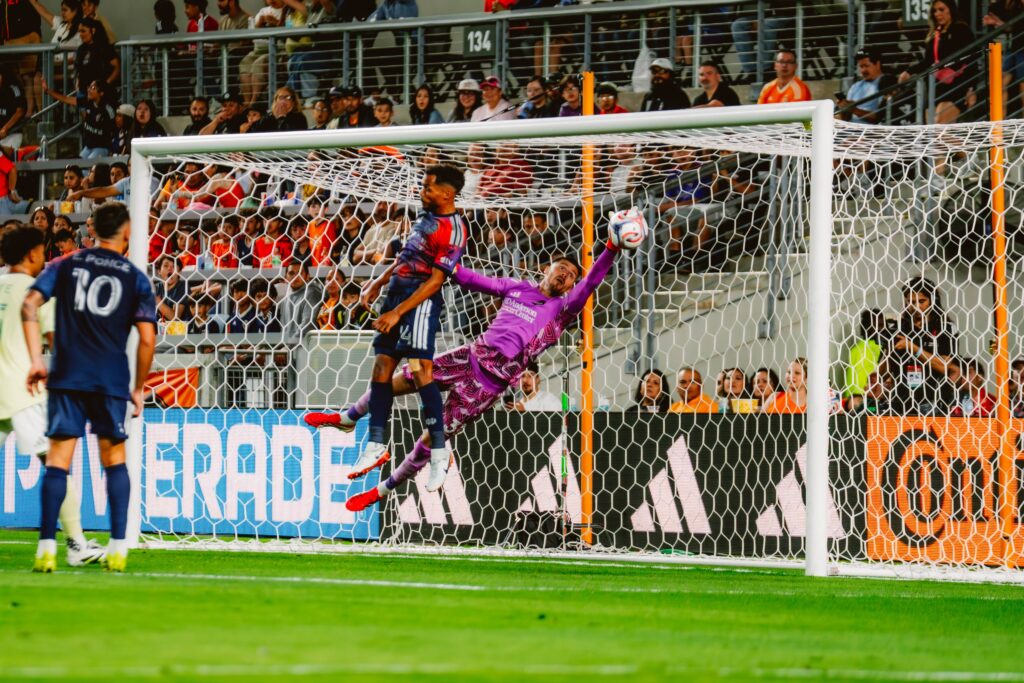
Houston also finished with 19 total shots compared to Portland’s 17, while forcing Portland’s defense to deal with 10 corner kicks, four more than the Timbers.
Yet Portland’s efficiency in front of goal told a slightly different story.
The Timbers produced five big chances compared to Houston’s two and forced several difficult saves with nine shots on target, compared to Houston’s six.
From a purely observational standpoint, Houston created more opportunities during key stretches of the match.
But football rarely follows the script written by statistics.
Portland Punish Houston’s Early Lapses
The first half exposed one of Houston’s recurring tactical problems this season: collective organization in transition.
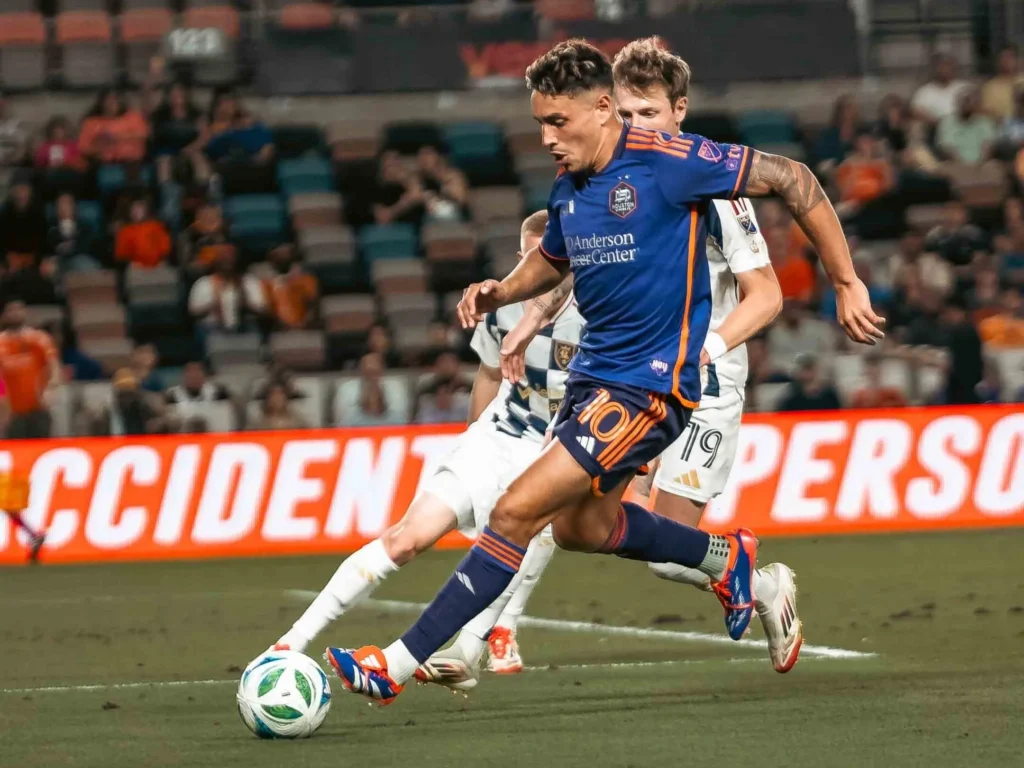
Portland repeatedly found space between Houston’s midfield and defensive lines. Their attacking movement forced the Dynamo into a reactive defensive posture, scrambling to recover shape whenever possession changed hands.
Eventually, the pressure told.
Gage Guerra gave Portland the lead late in the first half, finishing off a sequence that had been building for several minutes. Based on the rhythm of the match at that point, the goal felt inevitable.
Watching on, it was clear that Houston’s defensive structure looked stretched, particularly when transitioning from attack to defense. The gaps were there, and Portland were disciplined enough to exploit them.
Houston’s coach echoed that same concern when I asked him about it after the match.
“I thought we were undisciplined in the first half,” he told me. “When we designed something, whether to press collectively or drop collectively, we were on different pages.”
That lack of coordination allowed Portland to progress the ball through midfield with far too much comfort.
Still, Houston entered halftime trailing by only one goal, and that kept them firmly in the contest.
Houston’s Second-Half Response
Whatever adjustments were made in the locker room worked.
Just minutes after the restart, Guilherme scored to level the match at 1–1, instantly changing the emotional tone inside Shell Energy Stadium.
From where I sat, Houston looked like a different team after halftime. The Dynamo pressed higher, moved the ball faster, and showed far greater unity in their defensive shape.
Statistically, the game remained balanced. Portland finished with 52 percent possession, compared to Houston’s 48 percent, while both teams recorded 85 percent passing accuracy.
But the difference lay in Houston’s attacking progression. The Dynamo completed 84 percent of their passes in the final third, compared to Portland’s 71 percent, allowing Houston to sustain attacking pressure and gradually push the Timbers deeper into their own half.
The Midfield Battle Turns Physical
The second half also developed into a compelling physical contest in midfield.
Houston won 47 duels compared to Portland’s 42, while recording 12 interceptions compared to Portland’s four. Those defensive recoveries allowed the Dynamo to launch quick attacking transitions.
Houston also remained dangerous from set pieces, using their 10 corner kicks to keep Portland under pressure for long stretches. Still, Portland continued to threaten.
They finished the match with 13 shots inside the penalty area compared to Houston’s 11, highlighting their ability to create danger whenever they broke forward. This constant exchange of attacking phases made the match unpredictable and highly entertaining.
Andrade, Velde, and the Match’s Wildest Stretch
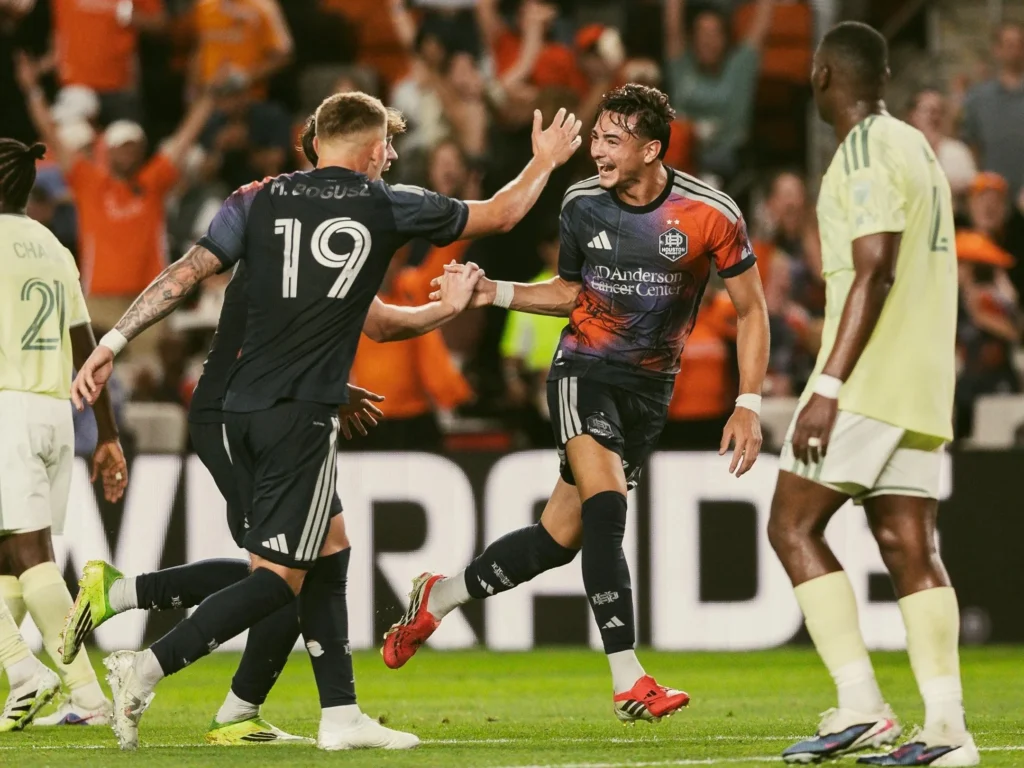
Houston appeared to seize control in the 77th minute when Eric Andrade scored to give the Dynamo a 2–1 lead. At that point the stadium sensed momentum shifting toward the home side.
But Portland refused to disappear quietly. Kristoffer Velde equalized to make it 2–2, punishing a lapse in Houston’s defensive concentration.
What followed was the most chaotic phase of the match. Both teams pushed forward aggressively, defensive structures loosened, and the game opened into genuine end-to-end football.
From my perspective, these are the moments that remind you why Major League Soccer continues to steadily grow as an entertainment product globally.
Bogusz Writes the Final Chapter
Just when it appeared the match would end in a draw, Houston produced one final moment of brilliance. Deep into stoppage time, Mateusz Bogusz scored the dramatic winning goal, assisted by Jack McGlynn, sending Shell Energy Stadium into celebration.
It was one of the most thrilling finishes I have covered this season. Bogusz’s influence extended beyond the winning goal. He also assisted Houston’s earlier equalizer and consistently disrupted Portland’s defensive structure.
Players who influence matches in multiple phases are rare. On this night Bogusz was exactly that kind of player. More importantly, Houston’s late goal reflected a mentality that statistics cannot measure. Even after Portland equalized late, the Dynamo continued pushing forward rather than settling for a draw.
That belief ultimately delivered the three points.
Lessons and the Road Ahead
Despite the victory, Houston’s coach was candid about the work that still lies ahead.
“If we’re going to continue to have success, we need to be on the same page,” he told me after the match.
From my analysis, that assessment is accurate.
Houston clearly possesses attacking quality. They can press aggressively, generate chances, and maintain intensity throughout the match. But their defensive coordination during transitions still carries risk, and stronger opponents may punish those gaps more ruthlessly.
Portland, for their part, will take encouragement from their attacking performance. Creating numerous chances away from home suggests their offensive structure is functioning well, even if the final result was disappointing.
Looking ahead, Houston now prepares for a road test against FC Dallas.
“We’re excited to go on the road,” the coach told me. “We’ve been in Houston forever and we really need a road trip.”
That match will provide a clearer indicator of where this Dynamo team truly stands in the Western Conference.
Final Thoughts
My biggest takeaway was Houston’s resilience.
Yes, Portland were dangerous and showed courage.
Yes, Houston showed moments of defensive vulnerability but a lot of resilience.
Houston Dynamo 3. Portland Timbers 2.
A chaotic, thrilling, and unforgettable night at Shell Energy Stadium.
© Bold Sports Media. All rights reserved. If sharing, kindly credit Bold Sports as the source and include a link to the original post. Unauthorised use is prohibited.