

By Muritala Hameed
Football has always been more than a sport in Nigeria. For decades, it has been the single most powerful unifying force in Nigeria. In a country deeply divided by ethnicity, religion, and politics, nothing binds us like the Super Eagles scoring a last-minute winner or the Super Falcons lifting the WAFCON trophy or advancing to the next round of the FIFA World Cup. Football is the one arena where Nigerians, young or old, Muslim or Chirstian, from Lagos to Kano, Aba to Jos, momentarily forget their differences and speak a common language of passion, pride, and possibility.
Sadly, the state of Nigerian football today tells a different story. The game that once inspired hope and national cohesion is slipping into alarming decline. From our national teams to domestic clubs, the regress is unmistakable and deeply troubling.
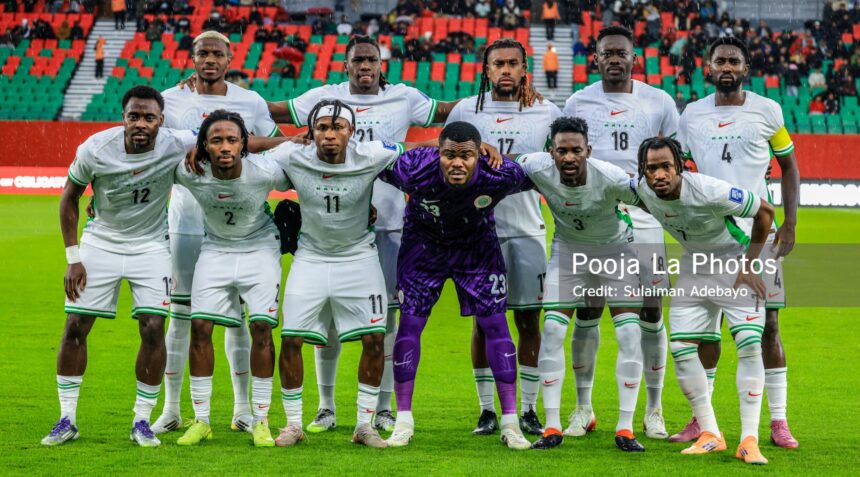
The Super Eagles, revered as one of Africa’s most successful national teams, boast a rich history that once made Nigeria the continent’s football pride. The team won the Africa Cup of Nations (AFCON) three times – in 1980, 1994 – and 2013, and finished as runners-up on several occasions, and consistently dominated World Cup qualifying campaigns. At one point, the Super Eagles were ranked the fifth-best team in the world by FIFA.
More Read



But today, that glory feels distant. The Super Eagles have now failed to qualify for two consecutive FIFA World Cup editions. The team missed the 2022 World Cup in Qatar and will also be missing in action at the 2026 edition in the United States, Mexico, and Canada, having lost to DR Congo in the CAF playoffs final, a heartbreaking defeat for millions of football-loving Nigerians. Missing two consecutive FIFA World Cups is nothing short of embarrassing for a nation with such a storied football past and a vast talent pool.
Our junior teams tell a similar story. Nigeria holds the record for the most FIFA U-17 World Cup titles. We have won five in total. Yet today, the Golden Eaglets struggle to even qualify for the global competition. Their absence from the U-17 World Cup in Qatar reflects a failing developmental structure. The U-20 men’s team fare no better. Their disappointing performance at the recently concluded U-20 World Cup in Chile reinforces a trend of declining youth football. Nigeria last reached the U-20 World Cup final in 2005, losing 2-1 to Lionel Messi’s Argentina. Since then, the Flying Eagles have failed to replicate that momentum, despite our rich history and abundance of raw talent.
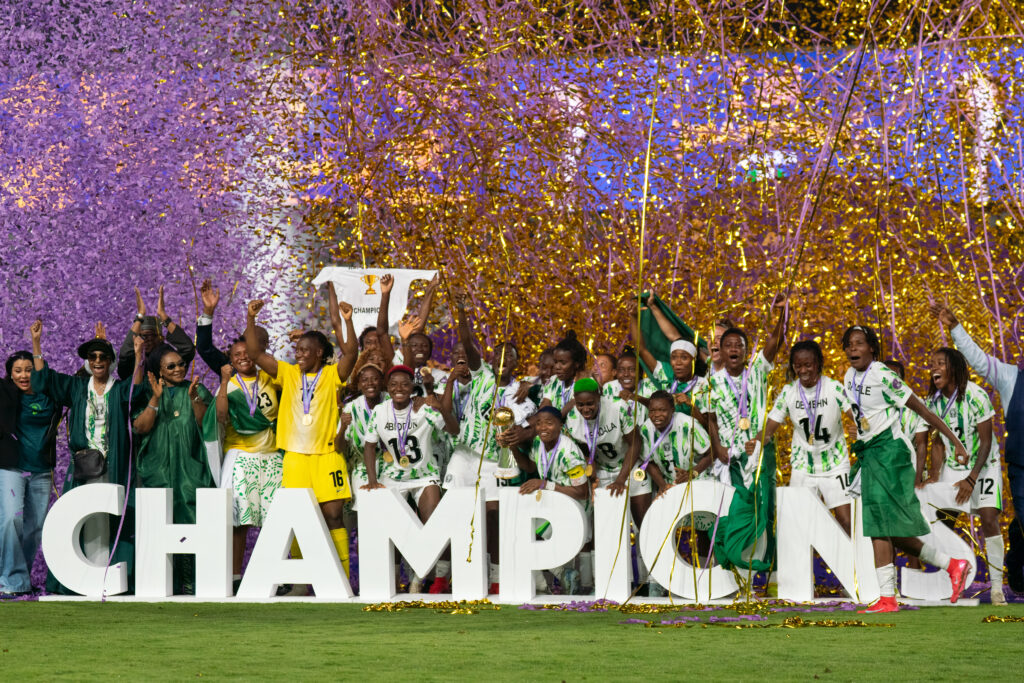
Women’s football presents a mixed picture. While the U-17 and U-20 women’s teams continue to struggle at the global level, the Super Falcons stand tall as the continent’s most dominant women’s team. Their spirited run to the Round of 16 at the last Women’s FIFA World Cup, where they narrowly lost to England on penalties, was inspiring. Their WAFCON triumph in Morocco earlier this year further confirmed their resilience and pedigree.
The decline is not limited to national teams. Nigeria’s domestic clubs have crashed out of relevance on the continent. Since Enyimba’s historic back-to-back CAF Champions League victories in 2003 and 2004, no Nigerian club has reached such heights again. In fact, Nigerian clubs often struggle to even qualify for the group stages of the tournament. Until this year, the last Nigerian club to reach the Champions League group stage did so in the 2018/19 season, a negative development for a country once regarded as a continental football powerhouse. Teams from South Egypt, Morocco and South Africa now dominate both the CAF Champions League and Confederation Cup.
This prolonged decline in our football reflects deeper structural issues. Poor funding, weak administration, inadequate infrastructure, lack of youth development, and the absence of modern sports business structures continue to undermine our domestic football.
Some may ask: Why does football matter so much? Why must we worry when there are other pressing national problems? The answer is simple: football has succeeded where politics and leadership have failed. It has built bridges across ethnic and religious divides, inspired national solidarity, created global opportunities for young people, and elevated Nigeria’s image internationally. A strong football culture is an asset, as it has the capacity to promote nation-building, boost the economy, create jobs, reduce youth restiveness, and build collective identity. We can, therefore, not allow our football glory to continue to wane. That will be not only a sporting failure but also a national tragedy.
This is why it is important that stakeholders in the sport sector begin to work to revive Nigeria’s football glory, and that must begin with revamping our football administration. The Nigerian Football Federation (NFF) must be run as a professional sports body, as it is done in other countries that take football seriously. Appointments into NFF must be based on competence, not politics, and there must be accountability in leadership.
Another thing we must do is to strengthen football development at the grassroots. The decline of our youth teams reflects the demise of grassroots football. We should revive school sports, community competitions, and football academies. In addition, we must invest in sporting infrastructure, both at the grassroots and national levels. Modern football requires modern training facilities, well-maintained stadiums, and sports science centres.
It is also important for our football stakeholders to be intentional about improving our domestic league. While I admit that things have improved a bit in our local league, we can and must do better. We must improve welfare for players, enforce contracts, ensure good officiating, and attract sponsorships. A strong domestic league is the backbone of any strong football nation. This is not debatable.
It also won’t be a bad idea for the NFF to develop a clear national football philosophy and a 10–15-year roadmap that is similar to what Morocco has done, which they are now seeing the results of now. Indeed, football must be treated as the business and multi-billion-dollar industry it is worldwide.
Nigeria cannot afford to lose the last thread that binds us as a people. As our politics becomes more divisive and our economy more uncertain, football remains the most accessible source of joy and unity for millions of Nigerians. It is time we began to rebuild and restore Nigeria to its rightful place as a football powerhouse, not only in Africa but globally.
Muritala, a media practitioner and football lover, writes from Ilorin, Kwara State. He can be reached via [email protected]
© Bold Sports Media. All rights reserved. If sharing, kindly credit Bold Sports as the source and include a link to the original post. Unauthorised use is prohibited.