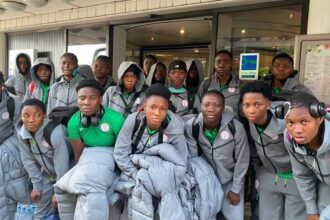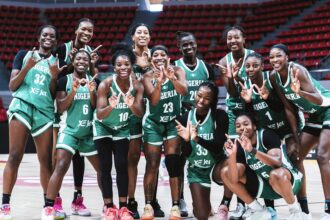



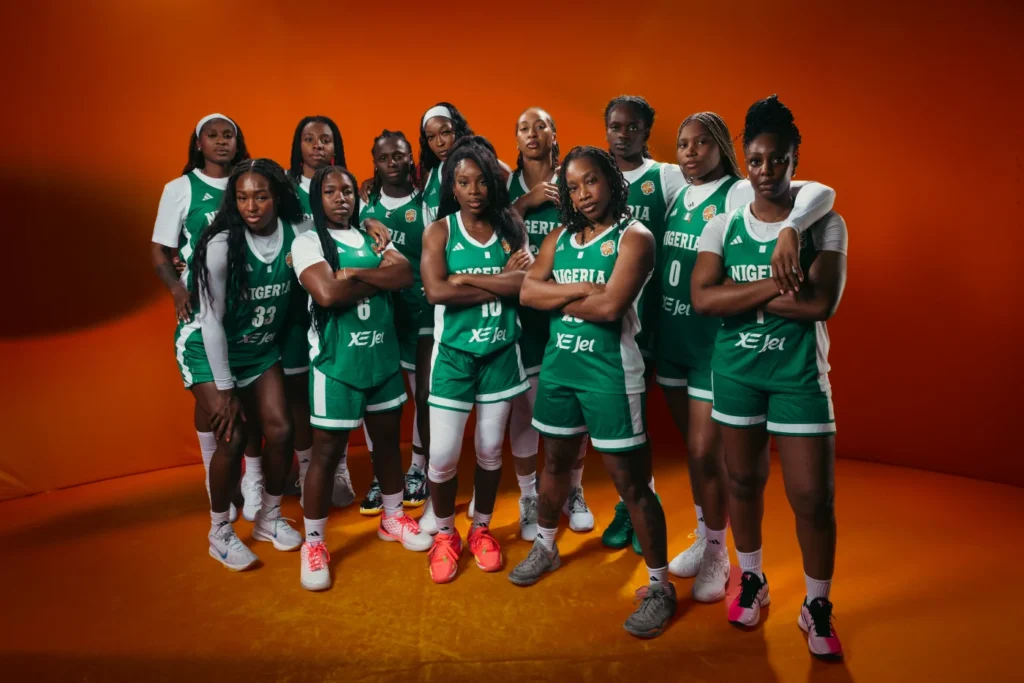
Ezinne Kalu has warned Nigeria’s rivals that they are yet to see the full strength of D’Tigress ahead of the 2026 FIBA Women’s Basketball World Cup in Berlin.
Nigeria enter the tournament ranked eighth in the world and will open their Group B campaign against Korea Republic on Friday, 4 September, before facing France and Hungary.
The D’Tigress suffered defeats during their preparations, but Kalu believes those results do not accurately reflect the quality of the team Nigeria will field at the World Cup.
“Honestly, I think we’re in a great spot, and nobody has really seen our full team yet,” Kalu told FIBA.
More Read





“They don’t know what we are capable of.”
Nigeria’s squad combines established internationals who have driven the country’s rise over the past decade with a new generation seeking to make its mark on the global stage.
“Even now we have a much better team and a fresh team, but with veterans too,” Kalu said.
“We’re coming at it with a different mindset, and we will see that in our performances coming up.”
Kalu’s confidence is rooted in a journey that has taken Nigeria from a breakthrough World Cup performance in Tenerife to a historic Olympic campaign in Paris.
She was part of the D’Tigress side that defeated Greece 57-56 at the 2018 FIBA Women’s Basketball World Cup.
The victory secured Nigeria’s place in the quarter-finals and made D’Tigress the first African team to reach that stage of the competition.
“That one was a stepping stone for us,” Kalu said.
“It was the first time that an African country had beaten a European team, so it propelled us to where we are now.”
Nigeria’s run in Tenerife demonstrated that an African team could compete with leading basketball nations on the sport’s biggest stage.
D’Tigress subsequently returned to the Olympics in Tokyo, where the delayed Games were staged largely behind closed doors because of the COVID-19 pandemic.
The empty arenas created a difficult environment for a Nigerian side accustomed to drawing energy from supporters and the emotion surrounding major matches.
“Individually it was tough being out there on the court with my teammates and not hearing people supporting us and cheering for us,” Kalu said.
“It was tough because we didn’t have the energy from the fans. All we heard was quietness.”
For Kalu, the absence of spectators removed an essential part of the sport.
“Basketball is passion. It’s noise, it’s drama and entertainment, so to not quite hear that on the court was difficult.”
The experience at the Paris 2024 Olympics could hardly have been more different.
Nigeria competed in packed arenas and defeated highly rated opponents on their way to becoming the first African women’s basketball team to reach an Olympic quarter-final.
“Paris was very special for us,” Kalu said.
“It was an amazing feeling to be out there on a different stage with new players, and we did really well.”
D’Tigress raised expectations for African basketball with their performances and demonstrated that the continent’s leading teams could advance beyond the group stage at the Olympics.
“We broke some records, set some standards, we set the bar really high,” Kalu said.
Nigeria’s run eventually ended against the United States, but Kalu believes the experience of reaching the last eight was itself an important step in the team’s development.
“Just to be in that space and have the opportunity to make the Quarter-Finals was an amazing feeling,” she said.
“Unfortunately we ran into the USA, the basketball beast of the world and this time we are ready.”
Nigeria now head to Berlin carrying expectations that extend beyond the country.
D’Tigress and Mali are the only African teams among the 16 nations competing at the World Cup, which places both sides at the forefront of the continent’s challenge.
Kalu believes their performances can inspire other African countries and encourage a new generation of players to believe that they can also compete internationally.
“It’s on us and Mali to give other countries the confidence to say, ‘we want to be like Nigeria and Mali one day’,” she said.
The ambition is to see Nigeria and Mali succeed while creating a pathway for more African countries to reach future World Cups.
“Maybe one day we will add more African countries, but it’s about progress, and that is all we can ask for.”
Nigeria begin that mission against Korea Republic at the Berlin Arena, with the opening game scheduled to start at 2.30pm in Berlin and 1.30pm Nigerian time.
From the milestone victory over Greece in Tenerife to the record-breaking performance in Paris, D’Tigress have repeatedly expanded the possibilities for African basketball.
Kalu believes Berlin will provide another opportunity to do the same.
“We are going to surprise a lot of teams.”
© Bold Sports Media. All rights reserved. If sharing, kindly credit Bold Sports as the source and include a link to the original post. Unauthorised use is prohibited.