


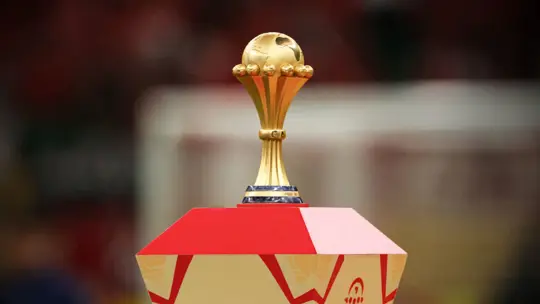
The Confederation of African Football (CAF) has reversed its decision to hold the Africa Cup of Nations (AFCON) every four years, with the continental tournament set to return to a two-year cycle.
The decision was unanimously reached by the CAF Executive Committee (EXCO) on Thursday and announced in an official statement released on the organisation’s website and social media platforms.
CAF President Patrice Motsepe had earlier indicated at the CAF Strategy Conference in Cabo Verde, held from October 7 to 9, 2026, that the governing body would reconsider its decision to move the AFCON to a four-year cycle, which was announced last year.
According to CAF, the reconsideration was partly driven by the need to secure sustainable financial resources for African football, as the proposed Africa Nations League, which was expected to replace the biennial AFCON, would require several years to generate the substantial revenue needed to support the continent’s football development and competitiveness.
More Read






Confirming the decision, Motsepe said the return to a two-year cycle was in the best interests of African football, CAF’s 54 member associations and African players competing for clubs outside the continent.
“The decision by the CAF EXCO that the CAF AFCON should take place every Two Years was based on advancing, protecting and promoting the interest of African Football and CAF’s 54 Member Associations, as well as the interest of African players employed by Football Clubs outside Africa,” Motsepe stated.
The CAF president also expressed confidence in the upcoming 2027 AFCON, which will be jointly hosted by Kenya, Tanzania and Uganda, before confirming the schedule for subsequent editions.

The next tournaments after 2027 will take place in 2028, 2031 and 2033, with the 2030 edition omitted to avoid a clash with the FIFA World Cup, in line with FIFA’s tradition of not scheduling major confederation national team tournaments in the same year as the global showpiece.
Motsepe further emphasised the cultural significance of the AFCON, describing it as an opportunity to celebrate Africa’s diverse cultures, customs and traditions while bringing together people from the continent’s 54 countries, the African diaspora and across the world.
He added that the decision would contribute significantly to the growth and development of football in Africa, while ensuring that CAF competitions remain financially sustainable and globally competitive.
© Bold Sports Media. All rights reserved. If sharing, kindly credit Bold Sports as the source and include a link to the original post. Unauthorised use is prohibited.