

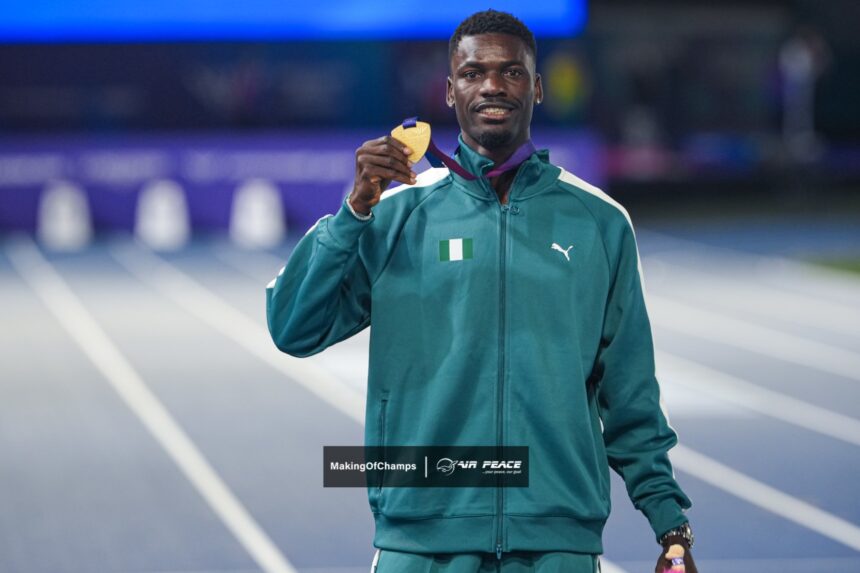
Enku Ekuta’s judo bronze looked modest beside Nigeria’s 10 gold medals in Glasgow. It is also the medal that makes the final table more interesting.
Remove Ekuta’s bronze and every other Nigerian medal came from athletics, para athletics, weightlifting or para powerlifting.
Athletics delivered 12. Para athletics added one. Para powerlifting produced six and weightlifting four.
Twenty-three medals from 24. That is 95.8 per cent.
More Read

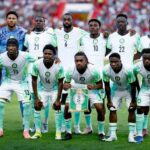
Nigeria finished Glasgow with 10 gold, seven silver and seven bronze medals, seventh on the medal table and the highest-ranked African country.
It was an excellent Commonwealth Games.
But with Los Angeles 2028 now less than two years away, the total of 24 is probably less useful than understanding where those medals came from and how many of the performances can survive a much harder Olympic or Paralympic field.
There is an important qualification before reading too much into the numbers.
Glasgow was a smaller Commonwealth Games than Birmingham four years earlier. The organisers staged 215 medal events across 10 sports, compared with 283 events across 19 sports at Birmingham 2022. Wrestling, historically a productive Commonwealth sport for Nigeria, was among those missing from the Glasgow programme.
So 95.8 per cent cannot simply be presented as proof that Nigerian sport has been reduced to four disciplines.
What it does provide is a useful starting point.
Within the programme Nigeria actually contested, almost all the success came from a very small group of sports. More importantly for LA28, several of those medals were won by athletes whose credentials extend well beyond the Commonwealth.
Some Glasgow medals carry more weight than others
Samuel Ogazi did not become a serious LA28 prospect because he won the Commonwealth 400m title.
He arrived in Glasgow as one.
Two years ago, as a teenager, Ogazi reached the Olympic 400m final in Paris. In June this year, he ran 43.38 seconds at the NCAA Championships, a Nigerian record that moved him to fourth on the world all-time list.
Glasgow added a senior title to a résumé that was already developing at the highest level.
Ezekiel Nathaniel’s 400m hurdles gold has similar weight behind it. He finished fourth at the 2025 World Championships in Tokyo, running a Nigerian record of 47.11 seconds. Chukwuebuka Enekwechi, the Commonwealth shot put champion, was sixth at the Paris Olympics.
These are not athletes whose LA28 cases rest on beating Commonwealth opposition.
Their performances against the world’s best already put them in the conversation.
That distinction matters when assessing the rest of Nigeria’s Glasgow medals.
Kanyinsola Ajayi won bronze in the 100m, yet his 9.84-second Nigerian record and current world standing arguably tell us more about his Olympic prospects than the colour of his Commonwealth medal.
The same applies to Tobi Amusan.
Amusan took bronze in Glasgow. She is also the world record holder, the reigning World Championship silver medallist and remains one of the leading hurdlers in the world.
Commonwealth gold is therefore a poor shorthand for Olympic medal potential. A bronze medallist in Glasgow can be closer to an LA podium than somebody who left Scotland with gold.
That is why Nigeria should come away from these Games with more than a medal table.
There is already the outline of an athletics group worth following through the next two years.
Ogazi, Nathaniel, Ajayi, Enekwechi and Amusan have produced global-level performances. Udodi Onwuzurike, Ella Onojuvwevwo, Ruth Usoro and Temitope Adeshina belong in the group immediately behind them.
For some, Beijing 2027 will tell us much more.
The World Athletics Championships there will bring the athletes missing from a Commonwealth field and offer the best major-championship test before Los Angeles.
By then, getting close will no longer be enough.
Nigeria’s emerging male group in particular has accumulated Olympic and World Championship finals without yet winning an individual global medal. Glasgow showed that they can finish races and competitions as champions. Beijing will show whether that can be repeated when the whole world turns up.
Nigeria already knows how to win globally in para powerlifting
There is less guesswork required with para powerlifting.
Nigeria won six medals in Glasgow, including gold through Esther Nworgu, Folashade Oluwafemiayo and Riluwan Idris.
For Oluwafemiayo, another major title simply continued one of Nigeria’s most accomplished careers. She is a two-time Paralympic champion and set a world record of 167kg while winning at Paris 2024. Nworgu was a Paralympic silver medallist in Paris.
And the strength of the programme extends beyond the Glasgow medal list. Onyinyechi Mark, a Paralympic champion in Paris, set another world record during the 2026 season.
There is a complication when projecting Glasgow directly onto Los Angeles.
Commonwealth para powerlifting uses combined lightweight and heavyweight medal events with a points system. Paralympic competition is divided into individual bodyweight categories. Six medals in Glasgow cannot therefore be converted into an expected LA28 medal total.
The personnel, however, are proven.
That makes para powerlifting perhaps Nigeria’s clearest established source of global medals going into the next Paralympic cycle. The task over the next two years is less about discovering contenders and more about keeping an existing group healthy, competitive, properly classified and on course through qualification.
Goodness Nwachukwu’s para athletics discus gold belongs in a similar conversation. Her Glasgow performance came with a world record in her class, providing evidence beyond the medal itself.
Weightlifting’s real LA race has started
Nigeria also has reason to take its four weightlifting medals seriously.
Edidiong Umoafia, Onome Didih and Rafiatu Lawal won gold, while Ruth Nyong took silver.
Lawal offers the strongest bridge between Commonwealth success and the global stage. She was a World Championship silver medallist in 2025 before winning in Glasgow.
Yet weightlifting also illustrates why the next two years matter more than the last week.
The IWF’s LA28 qualification system is already under way. Los Angeles will have 120 weightlifters across 12 medal categories, with only 10 athletes competing in each event.
A Commonwealth title does not book an Olympic place.
Nigeria’s lifters now have to build qualifying totals across designated competitions and remain competitive as the field narrows. The 2026 World Championships in Ningbo are part of that qualification period.
Glasgow has identified the athletes. Qualification will determine whether they make it to Los Angeles.
That means preparation cannot disappear between major Games.
Competition schedules, coaching, recovery, travel, funding and access to the right qualifying events become as important as what happened on the podium in Scotland.
One medal from everywhere else
The easiest response to Nigeria’s 95.8 per cent concentration would be to declare it a problem.
That would be too simple.
Olympic success does not require a country to be good at everything. Concentrating resources around sports and athletes with credible podium prospects can be sensible.
Glasgow has made some of those prospects unusually easy to identify.
The concern comes when concentration happens without a wider plan.
Ekuta’s judo bronze was Nigeria’s only medal outside the four disciplines that dominated the campaign. Glasgow’s reduced programme explains part of that, particularly the absence of wrestling, but it cannot make the issue irrelevant.
A medal strategy built around a handful of sports has very little room for injuries, qualification problems, loss of form or poor preparation.
Nigeria therefore has two jobs before Los Angeles.
Protect the areas already producing world-class athletes.
Then find out whether another sport can join them.
That does not mean distributing resources equally across every federation. An athlete ranked among the best in the world and approaching an Olympic qualifying campaign has different immediate needs from a programme still years away from international contention.
It means knowing the difference.
Glasgow has supplied enough evidence to begin making those decisions now.
There is a group of track and field athletes already reaching global finals. There is a para powerlifting programme that has repeatedly produced Paralympic champions. There are weightlifters whose next challenge is getting through a demanding Olympic qualification system.
Those are no longer speculative medal hopes.
They are programmes and athletes Nigeria can measure between now and 2028.
The next serious athletics checkpoint is Beijing in 2027. Weightlifting qualification is already running. The para powerlifters have rankings, competitions and qualification requirements of their own.
By the time Team Nigeria arrives in Los Angeles, nobody should need to discover at the opening ceremony where the country’s genuine medal chances are.
Glasgow has already told us.
Twenty-four medals made for a successful Commonwealth Games.
The more useful number is 23.
That is how many came from the part of Nigerian sport that now has to turn Commonwealth success into something much harder: Olympic and Paralympic medals in Los Angeles.
© Bold Sports Media. All rights reserved. If sharing, kindly credit Bold Sports as the source and include a link to the original post. Unauthorised use is prohibited.